
Coming of Age Ceremony Examples: Real Stories, Real Families & Your Questions Answered
From reluctant teens to divorced parents—how actual families created meaningful rites of passage (and what they learned along the way)
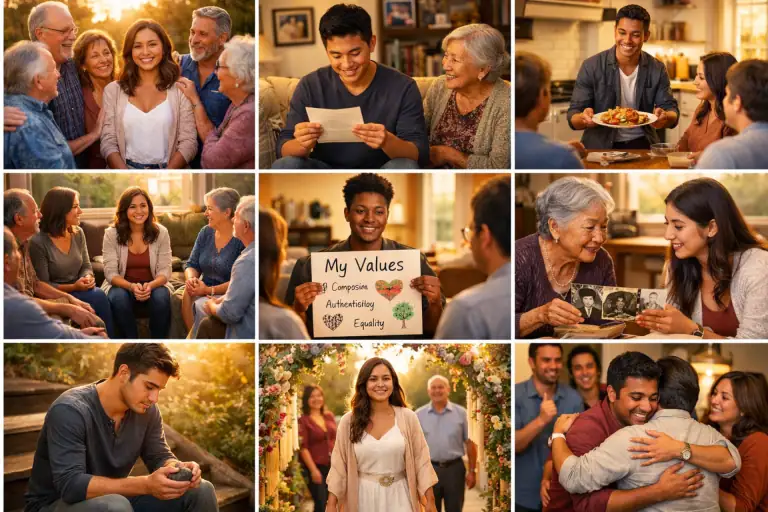
Looking for real coming of age ceremony examples that show how actual families create meaningful teen rites of passage? You’re in the right place. In this article, you’ll see seven detailed coming of age ceremony examples from real families who navigated reluctant teens, divorced parents, tight budgets, blended families, and more. These aren’t theory—these are real stories from families who figured it out.
You read Part 1 of this series. The ceremony ideas sounded beautiful. Maybe you even got a little emotional imagining your teen crossing a threshold or receiving letters from mentors.
And then reality hit.
“But my teen would never go for this.”
“We’re divorced—this would be a disaster.”
“We can’t afford something like that.”
“My family would think this is weird.”
I hear you. The gap between “beautiful idea” and “our actual messy reality” can feel impossibly wide.
That’s why this post exists. Because the families whose stories you’re about to read? They felt that same gap. They had the same doubts. They navigated the same obstacles.
And they figured it out.
Looking for real coming of age ceremony examples that show how actual families create meaningful teen rites of passage? You’re in the right place. In this article, you’ll see seven detailed coming of age ceremony examples from real families who navigated reluctant teens, divorced parents, tight budgets, blended families, and more. These aren’t theory—these are real stories from families who figured it out.
In Part 1, we explored seven powerful coming of age ceremony structures. Today, you’ll meet real families who used those ideas—and you’ll see exactly how they adapted them to fit their unique situations, budgets, and family dynamics.
You’ll also get answers to the questions you’re probably Googling right now: How do I convince my teen? What if we’re divorced? What if my family thinks this is ridiculous? How much does this actually cost?
Let’s start with the stories. Because nothing convinces like seeing someone else do the thing you’re scared to try.
Story #1: Sarah’s “Absolutely Not” That Turned Into “That Was Actually Amazing”
The Challenge:
When Sarah’s parents suggested a coming of age ceremony for her 16th birthday, her response was immediate: “Absolutely not. That sounds so awkward and forced. No way.”
Sarah was articulate, confident at school, and thriving in her debate team—but the idea of being the center of attention at home, having adults say “meaningful things” about her, felt performative and uncomfortable.
Her parents knew that forcing it would backfire completely.
What They Did:
Instead of pushing, Sarah’s mother asked: “What would you want, if you got to design the whole thing?”
After a week of thinking about it, Sarah proposed something that surprised her parents: “What if five people I choose write me letters about what they see in me that I might not see in myself? No big ceremony. Just letters I can read privately. And maybe we have dinner together afterward, but we don’t talk about the letters unless I want to.”
Her parents said yes immediately.
Sarah chose five adults (not including her parents): her aunt, her robotics coach, her mother’s college roommate who’d become like family, her debate coach, and her grandfather.
Each person wrote Sarah a letter. Her parents collected them in a leather journal and gave it to her on her 16th birthday morning—privately, no audience.
That evening, Sarah’s chosen five people came for dinner. They didn’t mention the letters unless Sarah brought them up. They just ate, talked, laughed. It felt like a normal birthday dinner with people who loved her.
What Happened:
Sarah read the letters alone in her room. She cried—her parents could hear her through the door. When she emerged for dinner an hour later, her eyes were red but she was smiling.
During dessert, Sarah’s grandfather asked gently: “Did you read them?”
Sarah nodded. Then, to everyone’s surprise, she said: “Thank you. I didn’t know you all saw me like that. It means… it means a lot.”
That was all she said about it that night. But two years later, when Sarah left for college, those letters went with her. And when she struggled through her first semester, feeling lost and homesick, she reread them.
At 19, Sarah told her mother: “I’m really glad we did that. I didn’t know I needed it then, but I did. And I really need those letters now.”
Which Ceremony Type: Letter Ceremony (Adapted)
Cost: $45 (leather journal + dinner for 7)
Story #2: The Anderson Family – When Parents Are Divorced
The Challenge:
Michael was 14 when his parents, Tom and Jennifer, suggested a coming of age ceremony. They’d been divorced for three years. The divorce had been painful. Tom had remarried; Jennifer was still single.
Michael’s first question: “Will this be weird? I don’t want it to be like my 10th birthday party where you guys barely talked to each other and I felt caught in the middle the whole time.”
Tom and Jennifer knew Michael was right—if they couldn’t cooperate gracefully, the ceremony would make everything worse.
What They Did:
Tom and Jennifer met without Michael present. They made three agreements:
- This ceremony is about Michael, not us. Any personal tensions stay invisible to him.
- We each get a role, but we don’t have to do it together. No forced co-presentation.
- Tom’s wife can participate if Michael wants her to. This was Jennifer’s hardest agreement, but she made it.
They chose a Mentor Circle structure. Michael selected six adults: his dad, his mom, his stepmom Sarah, his uncle (Jennifer’s brother), his basketball coach, and his dad’s best friend who’d been like a second father.
The ceremony took place at a park pavilion—neutral territory, no one’s house.
Structure:
- Tom opened the ceremony (3 minutes): “We’re here to honor Michael’s journey to young adulthood”
- Each mentor spoke for 3-4 minutes directly to Michael
- Jennifer went last, closing with: “No matter what changes, you are loved by all of us”
- Michael responded briefly
- Everyone shared a meal (barbecue Michael’s uncle brought)
The key: Tom and Jennifer never had to stand together, never had to coordinate, never had to pretend they were friends. They just each showed up for their son.
What Happened:
Michael cried when his mom and dad both spoke about watching him grow. He later told his dad: “I was worried you guys would make it about yourselves. But you didn’t. You just… you both showed up for me. That meant everything.”
The surprise came from Sarah, his stepmom. She’d only been in Michael’s life for two years, and she was nervous about speaking. But her words were simple and powerful: “I didn’t get to watch you grow from a baby. But I’ve watched you become more yourself these past two years, and it’s been an honor. I promise to keep showing up as you keep growing.”
Michael hugged her. It was the first time he’d initiated a hug with her.
Three years later, Michael told a friend: “My parents’ divorce was the worst thing that happened to my childhood. But that ceremony? That was one of the best things.”
Which Ceremony Type: Mentor Circle
Cost: $120 (pavilion rental + catered meal)
Story #3: The Backyard Ceremony – When Budget Is Tight
The Challenge:
The Martinez family wanted to honor their daughter Lucia’s 15th birthday with something meaningful, but money was extremely tight. Medical bills from Lucia’s younger brother’s surgery had depleted their savings. Spending hundreds of dollars on a ceremony felt impossible.
But they also knew Lucia was struggling with self-worth, feeling invisible at school, questioning whether she mattered. They wanted to give her something that said: You matter. We see you. You are loved.
What They Did:
Total budget: $175
They combined elements from Letter Ceremony and Values Declaration:
Two Weeks Before:
- Asked 8 people to write letters to Lucia (free)
- Printed letters at home and put them in a $12 binder from Target
- Helped Lucia identify her three core values
Day of Ceremony:
- Location: Their backyard (free)
- Decorations: String lights they already owned + flowers from their garden
- Food: Potluck—each guest brought a dish (cost to family: $35 for main dish)
- Lucia’s mom made tres leches cake ($18 for ingredients)
Ceremony Structure (45 minutes):
- Father opened with welcome
- Four letters read aloud (Lucia chose which four)
- Lucia declared her three values and explained each
- Each value represented by a candle Lucia lit
- Mother closed with blessing
- Everyone shared meal together
Special touch ($110): Lucia’s parents commissioned a local art student to create a watercolor painting of Lucia’s three values as symbols. This became Lucia’s gift—something she’d have forever, hanging in her room.
What Happened:
When Lucia’s grandmother read her letter—describing watching Lucia care for her little brother during his illness, never complaining, always gentle—Lucia broke down crying. “I didn’t think anyone saw that,” she whispered.
Her father, whose own father had never affirmed him, told Lucia: “You are brave, you are kind, and you are strong. I see you. I am so proud to be your father.” It was the first time he’d said words like that out loud to anyone.
Lucia later told her mother: “That was better than any birthday party I could have had. All my friends have big parties with expensive stuff. But none of them have ever had anyone tell them they matter like that.”
The watercolor painting still hangs in Lucia’s room. She’s 17 now. When she feels lost or doubts herself, she looks at those symbols and remembers: Courage. Compassion. Creativity. That’s who I am.
Which Ceremony Types: Letter Ceremony + Values Declaration
Total Cost: $175
The Martinez family’s coming of age ceremony example proves that meaningful doesn’t require expensive. When families see real coming of age ceremony examples like this, they realize budget limitations don’t prevent powerful experiences.
Budget Breakdown:
- Binder for letters: $12
- Main dish ingredients: $35
- Cake ingredients: $18
- Custom artwork: $110
- Total: $175
Seeing Your Family in These Stories?
Whether you’re navigating divorce, budget concerns, or a hesitant teen, we’ve helped families in your exact situation create coming of age ceremony examples that actually work for modern families.
Our ceremony services start at $350 and include consultation, custom script writing, and guidance for your specific family situation.
Explore Coming of Age Services Free ConsultationStory #4: David’s Quiet Ceremony – For the Introverted Teen
The Challenge:
David was 16, brilliant with computers, and so introverted that even family dinners exhausted him. The idea of being the center of attention, of people speaking *about* him while he sat there listening, made him physically anxious.
His parents knew that any traditional ceremony—even a small one—would be torture for him. But they also wanted to mark this threshold, to give him something that honored who he was becoming.
The question: How do you create a meaningful ceremony for someone who desperately doesn’t want to be the center of attention?
What They Did:
David’s mother asked him: “What if we made your ‘ceremony’ something you DO instead of something people do FOR you?”
David had been learning woodworking. He’d been wanting to build something meaningful but hadn’t known what. His dad suggested: “What if you build something that represents this transition? And when it’s done, we gather just the four of us [parents + little sister] and you show us what you made and why?”
David agreed.
Over three months, David built a small wooden box with a hinged lid. On the lid, he carved three symbols—one for his past (a tree, representing his childhood love of climbing), one for his present (circuit board pattern, representing his current passion), and one for his future (a question mark).
The “Ceremony” (20 minutes):
- Family gathered in the garage where David worked
- David presented his box and explained each symbol
- His father and mother each placed something in the box: letters they’d written about what they saw in David, to be opened when he turned 18
- His sister gave him a stone she’d painted with the words “You matter”
- David closed the box and placed it on his bookshelf
That was it. No big ceremony. No speeches. No spotlight. Just four people in a garage, witnessing David’s creation and marking his transition.
What Happened:
When David explained the question mark on the lid—”I don’t know who I’ll be yet, and that’s okay”—his mother cried. His father squeezed his shoulder and said simply: “I’m proud of you, son.”
David didn’t cry. He smiled—small, but real. And he said: “Thanks for not making this a big thing.”
Two years later, when David left for college, that box went with him. And when he opened his parents’ letters on his 18th birthday, alone in his dorm room, he texted them: “I’m glad we did that ceremony. It was exactly right for me.”
Which Ceremony Type: Skill Passage (Heavily Adapted)
Cost: $85 (wood and woodworking supplies)
Story #5: When Grandparents Live Across the Country
The Challenge:
The Chen family wanted Emma’s grandparents and extended family to participate in her 17th coming of age ceremony. But Emma’s grandparents lived in California (the Chens were in Boston), her aunt lived in Texas, and her godparents lived overseas.
Everyone wanted to be part of it. No one could afford to fly in. And Emma really wanted her grandmother—who’d been her primary caregiver when Emma’s mother went back to work—to be meaningfully present, not just watching on Zoom.
What They Did:
They created a hybrid Letter Ceremony with both in-person and recorded elements:
Three Weeks Before:
- Asked local mentors to write letters (to be read at ceremony)
- Asked distant relatives/mentors to record video messages
- Emma’s father, who had video editing skills, compiled all videos into one 20-minute film
Ceremony Structure (60 minutes):
- Welcome from parents
- Three local mentors read their letters aloud
- Lights dimmed, played compiled video of 6 distant loved ones
- Emma responded to what she’d heard
- Parents closed with blessing
- Reception with local guests
The key: Emma’s grandmother’s video wasn’t just a message—it was her telling the story of Emma’s childhood, showing Emma’s baby blanket she’d kept, reading a poem she’d written. It felt present and intimate, not distant.
After the ceremony, Emma video-called her grandmother immediately so Grandma could “be there” for the reception.
What Happened:
When Emma’s grandmother appeared on screen saying, “I remember the day you were born. I held you and I promised I would always see you. Emma, I still see you. I see your kindness, your courage, your brilliant mind. I am so proud of the woman you’re becoming,” Emma sobbed.
The video felt more personal than if Grandma had been on a Zoom call trying to speak over technical difficulties. She’d been able to craft her words carefully, hold up meaningful objects, and create something Emma could watch again and again.
Emma later said: “It was like she was there. Better than there, actually—because I can watch it whenever I miss her.”
When Emma left for college the next year, her father put that video compilation on a thumb drive for her. She’s watched it three times during hard moments.
Which Ceremony Type: Letter Ceremony (Hybrid with Video)
Cost: $60 (thumb drives + reception food for local guests)
This coming of age ceremony example demonstrates how distance doesn’t prevent participation. Hybrid ceremonies are becoming increasingly common in our coming of age ceremony examples collection.
Story #6: Emily’s Ceremony – Secular Family, Religious Extended Family
The Challenge:
Emily’s parents were secular. They’d left organized religion years ago and raised Emily with humanistic values—ethics, compassion, reason, wonder at the natural world.
But Emily’s grandparents were devout Christians. When Emily’s parents mentioned planning a coming of age ceremony, Grandma’s first question was: “Will there be a minister? Will Emily be confirmed in the faith?”
Emily’s mother gently explained: “We’re doing a secular ceremony. No religious component.”
Grandma was hurt. Grandpa was confused. Emily’s aunt texted: “Are you sure you want to do something without God? What message does that send Emily?”
Emily’s parents faced a choice: Cancel the ceremony to avoid family tension? Exclude the religious relatives? Do a religious ceremony they didn’t believe in?
None of those options felt right.
What They Did:
Emily’s father called his mother and said:
“Mom, we want you there. You’re important to Emily. But this ceremony will reflect our family’s values—which are secular. We’re not asking you to participate in something that violates your beliefs. We’re asking you to witness Emily being honored according to OURS. Can you do that out of love for your granddaughter?”
After a long pause, Grandma said: “I can do that.”
They designed a Values Declaration ceremony that was explicitly secular but respectful:
- Emily declared her values: Kindness, Curiosity, Courage, Justice
- Parents spoke about ethics and meaning without God-language
- Grandparents were invited to speak (if they wanted) about what they saw in Emily
Grandma’s Role: She gave Emily a gift—a journal with this inscription: “I pray for you every day. I know you don’t believe what I believe, and that’s okay. I see who you are becoming, and I am proud.”
It was honest. It was loving. It honored their difference without making either side wrong.
What Happened:
During the ceremony, when Emily declared “I value Curiosity,” her grandfather spoke up (unplanned): “That curiosity—that desire to understand the world—comes from both of us. I seek to understand God. You seek to understand nature. We’re not so different.”
It was a moment of bridge-building that Emily hadn’t expected. Later, she told her mother: “I’m really glad Grandma and Grandpa were there. It would have felt like I was rejecting them if they weren’t.”
Her mother agreed: “We gave them a chance to love you across our differences. And they showed up beautifully.”
Which Ceremony Type: Values Declaration
Cost: $90 (printed programs + dinner for 12)
Story #7: Jake’s Three-Household Ceremony – Blended Family Complexity
The Challenge:
Jake, age 15, had a complicated family tree:
- Mom (primary custody)
- Stepdad (married to mom for 8 years, helped raise Jake)
- Dad (every other weekend + summers)
- Stepmom (married to dad for 3 years, Jake liked her but wasn’t super close)
- Half-sister (6 years old, from mom’s marriage)
- Stepsister (12 years old, stepmom’s daughter from first marriage)
When Jake’s mom suggested a coming of age ceremony, Jake’s first response was: “Who would even come? Do I have to invite everyone? It’s going to be so awkward.”
And honestly, he had a point. Jake’s parents barely spoke to each other. Stepmom and Mom had never met. Stepdad felt invisible sometimes. Everyone had strong opinions about Jake’s life.
The risk: A ceremony that made Jake feel caught in the middle of adult tensions.
What They Did:
Jake’s mom had a hard conversation with Jake’s dad. She said:
“We owe it to Jake to not make this weird. Can we agree: This is about him. We don’t have to be friends. We just have to show up for him. Can we do that?”
Dad agreed. Then they made a plan:
Strategy for Managing Complexity:
- Jake chooses who comes. His ceremony, his guest list. (He chose everyone—he wanted his whole family there.)
- Neutral location: Community center, not anyone’s home
- Short ceremony: 30 minutes, then casual reception where people can talk or not
- Each adult gets their moment: Brief (2 minutes each), speaking directly to Jake, no jabs at anyone else
- Facilitator: Jake’s aunt (mom’s sister, liked by everyone) facilitated so no parent had to manage the room
They used a modified Mentor Circle:
- Each parent/stepparent spoke briefly
- Jake’s uncle (dad’s brother) spoke
- Jake’s soccer coach spoke
- Jake responded
Ground rules given by aunt at start:
- Speak to Jake, not about other adults
- Keep it under 2 minutes
- Focus on who Jake is and who he’s becoming
What Happened:
Every adult showed up. Every adult followed the rules. No one made it weird.
The most powerful moment came when Jake’s stepdad—who often felt like he had no “official” role in Jake’s life—said:
“Jake, I didn’t get to be there when you were born. But I’ve been there for a lot of your growing up. I’ve watched you become kinder, braver, more yourself. I don’t have a title that says I get to be proud of you, but I am. I’m so damn proud.”
Jake, who’d always been a little distant from his stepdad, teared up. After the ceremony, he gave him a long hug and said: “Thanks for being here. Thanks for caring.”
Jake’s dad and stepdad shook hands afterward. It was brief, awkward, but genuine. Both men showed up. Both men cared about the same kid. That was enough.
Three years later, Jake told a friend: “My family is complicated. But at that ceremony, everyone put their shit aside for me. That was the first time I felt like I wasn’t caught between them. Like they could all just… love me at the same time.”
Which Ceremony Type: Mentor Circle (Adapted)
Cost: $185 (community center rental + simple reception)
Coming of Age Ceremony Examples: Your Questions Answered
Those coming of age ceremony examples show it’s possible—but you probably still have questions. Let’s address the ones I hear most often from families considering their own coming of age ceremony examples.
Your Coming of Age Ceremony Questions, Answered
🎯 Getting Teen Buy-In
Don’t try to convince them. Ask them to design it.
“Weird” and “forced” usually mean “not like that”—not “absolutely no.” Say: “I hear you. What would make this feel right to you? You design it, we’ll make it happen.” Give them total control over format, who’s invited, where it happens, how long it lasts.
Sarah’s story (above) is the perfect example: Her parents didn’t push their vision. They asked for hers. She designed something that felt right to her, and it ended up being deeply meaningful.
Introverted teens need ceremony too—it just has to be smaller and activity-based.
Look at David’s story: He built a wooden box and presented it to just his immediate family in his garage. Twenty minutes. Four people. No spotlight. That was perfect for him.
For shy teens, try:
- Letter ceremony with private reading (no live performance)
- Skill passage focused on creating/doing rather than speaking
- Threshold crossing with just parents (symbolic walk together)
- Recorded messages instead of in-person speeches
- Audience of 3-5 people maximum
The goal isn’t “get over shyness”—it’s “honor who they actually are.”
No. Please don’t.
Coming of age ceremonies work because teens have agency in their own transition. Surprising them removes that agency and can feel like a performance FOR them rather than WITH them.
What you can do:
- Surprise them with HOW special it is (amazing venue, unexpected guests)
- Surprise them with WHAT people say (content of letters/speeches)
- Surprise them with thoughtful details they didn’t plan
But the existence of the ceremony itself? They need to know. They need to consent. Otherwise it’s just awkward.
Nervous is different from resistant. Nervous means they care.
Validate their nervousness: “Yeah, it’s vulnerable to be seen like this. That’s actually the point—letting people see you at this threshold. Being nervous means it matters to you.”
Ways to reduce nervousness:
- Practice run-through (rehearse ceremony structure without full audience)
- They don’t have to speak much (letters can be read TO them)
- They can have notes if they respond
- Smaller guest list
- Shorter ceremony (20-30 minutes vs. 60-90)
- Safe person next to them (best friend, sibling, favorite aunt)
Don’t call it a “ceremony.” Use their language.
Try this approach:
“You’re at this weird in-between place—not a kid anymore, not quite an adult yet. That’s confusing. I want to mark this transition in a way that honors who you’re becoming. What would that look like for you?”
Or show them Part 1 of this series and say: “Read these ceremony ideas. If any of them feel right to you—like actually you, not what I want—we’ll do it. If none of them feel right, we won’t.”
Frame it as solving THEIR problem (the ambiguity of adolescence) rather than fulfilling YOUR dream of a ceremony.
👨👩👧👦 Navigating Family Dynamics
Yes. The Anderson family (story above) proves it.
Keys to success:
- Pre-meeting without teen: Get on same page about ground rules
- Neutral location: Not either parent’s home
- Separate roles: You don’t have to co-present; each person speaks individually
- Focus on teen: “This is about [teen’s name], not us”
- Clear structure: Who speaks when, for how long
- Facilitator: Someone neutral manages the ceremony (not either parent)
You don’t have to be friends with your ex. You just have to cooperate for 30-60 minutes to honor your child. That’s achievable.
Let your teen decide.
Ask them: “Do you want [stepmom/stepdad] to participate? If yes, in what way?”
Jake’s stepdad’s moment in Story #7 was powerful precisely because Jake wanted him there and stepdad spoke authentically about his actual relationship with Jake—which wasn’t “like a father” but was real and meaningful.
Stepparents can:
- Write a letter or speak briefly
- Attend as witness (no speaking role)
- Help with logistics (coordinator, photographer)
- Not attend (if teen isn’t ready for that, that’s okay)
What matters is honoring the actual relationship that exists—not forcing something because “we’re family now.”
You don’t need their approval. You need their presence (if teen wants them there).
Say this: “I know this is different from what you grew up with. We’re creating something meaningful for [teen]. You’re invited to witness it. We’d love to have you there.”
Then let them decide. If they come and sit politely, that’s enough. If they don’t come, that’s their choice.
Don’t:
- Argue about whether it’s “real” or “legitimate”
- Try to convince them it’s as meaningful as religious ceremonies
- Make it about getting their validation
Do:
- Explain what will happen
- Invite them warmly
- Accept their choice (come or don’t)
- Move forward regardless
Emily’s story (above) is your roadmap.
Clear communication upfront: “This will be a secular ceremony reflecting our family’s values. We’re not asking you to participate in something that violates your beliefs. We’re inviting you to witness our daughter being honored according to ours. Can you do that out of love for [teen]?”
Most grandparents/relatives will say yes. Some will decline. Both are okay.
What NOT to do:
- Add religious elements you don’t believe in to make them comfortable
- Let them take over the ceremony to make it religious
- Cancel the ceremony to avoid conflict
What TO do:
- Be clear about what it will be
- Invite their presence, not their approval
- Let them decide whether to attend
- Give them a role if they want one (speaking briefly)
Weave them together intentionally. Name what you’re doing.
Approach:
- Identify 1-2 elements from each cultural tradition
- Explain each element’s significance during ceremony
- Show how they complement each other
Example (Irish/Mexican family):
- Irish blessing spoken by grandmother
- Mexican coming-of-age tradition: presentation of special gift
- Both families contribute to meal afterward
- Teen speaks about carrying both heritages forward
The key is showing how your teen is a bridge between worlds, carrying multiple traditions forward together.
Then don’t include the toxic people. Really.
Your teen’s ceremony is not the place to force family healing. If Uncle Bob makes everything about himself, if Aunt Susan criticizes everything you do, if Grandpa will get drunk and embarrass everyone—don’t invite them.
Create a ceremony with safe people only. Your teen needs support, not stress.
Alternative: Do ceremony with chosen family (non-relatives who’ve been supportive) instead of biological family. Mentors, teachers, family friends, parents of teen’s friends—these can be your “ceremony community.”
💰 Practical Concerns
It can cost anywhere from $50 to $2,000+ depending on your choices.
Budget Examples from Real Families:
- $50-100: Letters + homemade ceremony + potluck
- $175: Letters + values declaration + backyard + art commission (Martinez family)
- $350-750: Custom ceremony script + professional guidance + venue + catered meal
- $1,200+: Premium ceremony package with professional celebrant, keepsake book, extended services
Where money goes:
- Venue rental (if not at home): $50-300
- Food/catering: $50-500 depending on guest count
- Professional ceremony script: $350
- Professional delivery: $750+
- Keepsake elements: $0-200
- Gifts for teen: $50-500
The Martinez family ceremony (Story #3) is proof that meaningful doesn’t require expensive.
Mentors don’t have to be people you see every day. They need to be people who SEE your teen.
Potential mentors:
- Teachers who’ve had meaningful impact
- Coaches (sports, music, debate, etc.)
- Parents of teen’s friends (if close relationship)
- Online mentors (teen’s Discord community leader, online class teacher)
- Family friends from previous location (before you moved)
- Therapist (if appropriate relationship)
- Youth group leader
- Older siblings of friends
- Boss from teen’s first job
Chen family (Story #5) had mostly distant mentors who participated via video. Geographic distance doesn’t disqualify someone.
Absolutely. Most families do.
Of the seven families in this article, only one considered hiring professional help. The rest created ceremonies themselves using:
- Ideas from Part 1 of this series
- Their own ceremony structure (opening, main content, closing)
- Simple scripts they wrote
- Parent or relative as facilitator
When professional help is worth it:
- You want polished, beautiful ceremony script but don’t trust your writing
- Family dynamics are complex and you need neutral facilitation
- You want professional delivery (celebrant speaks for you)
- You’re grieving (memorial coming of age) and can’t manage the details
When DIY is perfect:
- Simple ceremony structure
- Small gathering
- Family comfortable speaking/facilitating
- Budget is tight
Then create it yourself using free resources.
This blog series IS your free resource:
- Part 1: Seven ceremony types with detailed how-tos
- Part 2 (you’re reading it): Real family examples and FAQ
- Part 3 (coming next week): Step-by-step planning guide
DIY approach:
- Read all three parts of this series
- Choose 1-2 ceremony elements
- Write simple script (opening, main content, closing)
- Gather people
- Do the ceremony
Our professional services exist for families who WANT extra support, not because you NEED it. You can absolutely do this yourself.
20-60 minutes for the ceremony itself. Less is often more.
Timing examples:
- David’s ceremony: 20 minutes (intimate, small)
- Sarah’s ceremony: 45 minutes (letters + dinner)
- Anderson family: 30 minutes ceremony + 60 minutes reception
- Jake’s ceremony: 35 minutes ceremony + casual meal after
Structure:
- Opening: 3-5 minutes
- Main content: 15-40 minutes
- Teen response: 5-10 minutes
- Closing: 3-5 minutes
Then reception/meal where people can talk informally.
Remember: Shorter ceremony with full presence is better than long ceremony where people tune out.
📅 Timing & Age
No age is “wrong” if it feels right for your teen.
13: Traditional age for many cultures (bar/bat mitzvah age). Good for teens who mature early.
16: Sweet spot for many families (driving age, more independence, clear developmental shift).
18: Legal adulthood, going to college, leaving home—major threshold.
Families in this article:
- Michael: 14
- Lucia: 15
- Sarah, David: 16
- Emma: 17
- Jake: 15
The “right” age is when YOUR teen is ready for more responsibility, independence, or when a major life change is happening.
Either works—depends on your teen.
Same day as birthday:
- ✅ One celebration, less planning
- ✅ Natural milestone marker
- ❌ Birthday party + ceremony can feel like too much
- ❌ Ceremony might get overshadowed by “birthday” feeling
Separate from birthday:
- ✅ Ceremony stands alone as its own thing
- ✅ Two special days instead of one
- ✅ Birthday party can be with friends, ceremony with family
- ❌ More coordination required
Common approach: Birthday party on actual birthday (friends, cake, fun). Ceremony separate weekend (family, mentors, meaningful).
You can, but only if they both want a shared ceremony.
When shared ceremony works:
- Twins or very close in age (within 1-2 years)
- Both kids genuinely want to share it
- Both are reaching same developmental milestone
- Budget requires combining
Structure for shared ceremony:
- Each teen gets individual attention (separate letters, separate speaking time)
- Some elements can be shared (opening, closing, meal)
- Clear: “We’re honoring both of you individually, together”
When separate is better:
- Different ages (13 and 16 are very different stages)
- Very different personalities
- One teen wants it, other is resistant
- Sibling rivalry would make shared ceremony tense
Yes. There’s no expiration date on marking meaningful transitions.
If your teen is 19 and about to start college, you can do a threshold ceremony.
If they’re 21 and just graduated college, you can do a ceremony honoring their entry into full adulthood.
If they’re 25 and just made a major life change, you can mark that transition.
It’s never too late to say: “We want to honor this moment in your life. We want to witness who you’re becoming.”
😰 What Can Go Wrong (And How to Handle It)
Tears are not a problem. Tears are proof that it’s working.
Almost every family story in this article includes tears:
- Sarah cried reading letters
- Michael cried when his parents both spoke
- Lucia cried when her grandmother read her letter
- Emma cried watching her grandmother’s video
What to do when tears happen:
- ✅ Pause briefly
- ✅ Offer tissue
- ✅ Give person time to collect themselves
- ✅ Continue when they’re ready
- ❌ Don’t apologize for emotion
- ❌ Don’t rush past it
- ❌ Don’t make jokes to deflect
Emotion means the ceremony is hitting the mark. That’s good, not bad.
That’s okay. Build in flexibility.
If your teen is supposed to respond after hearing letters/speeches and they’re too emotional:
- Say: “Take your time. We’re not in a hurry.”
- Offer alternative: “You can speak now, or write something you share later”
- It’s okay to just say “Thank you” and be done
David (Story #4) barely spoke—just showed his wooden box and explained the symbols. That was perfect. Sarah (Story #1) didn’t talk about the letters at all during dinner. Also perfect.
The goal isn’t performance. The goal is presence.
Have a backup plan, but also: ceremony continues.
Prevention:
- Confirm attendance one week before
- Send reminder 2 days before
- Ask for written letter as backup (can be read by someone else if they can’t attend)
If someone doesn’t show:
- Acknowledge briefly: “[Person] wanted to be here but couldn’t make it”
- Read their letter if they wrote one
- Don’t dwell on absence—focus on who IS there
The ceremony is about the people who show up, not the people who don’t.
Prevention is key: Give clear guidelines beforehand.
Before ceremony, tell participants:
- “Speak directly to [teen], not about them”
- “Keep it under [X] minutes”
- “Focus on who they are/are becoming, not past mistakes or embarrassing stories”
- “No jokes at their expense, no ‘remember when you were so little’ condescension”
If someone goes off-script during ceremony:
- Facilitator can gently interrupt: “Thank you, [name]. Let’s hear from our next speaker.”
- After ceremony, you can talk to teen privately: “I’m sorry Uncle Bob made that weird. That wasn’t supposed to happen.”
Jake’s aunt (Story #7) gave clear ground rules at the start. Everyone followed them. Setting expectations works.
Some awkwardness is normal. Push through it.
Any ceremony that involves vulnerability will feel a little awkward at first. That’s the discomfort of being seen, of sincerity in a world that defaults to irony.
The awkwardness usually breaks when:
- First person speaks from the heart (everyone relaxes into it)
- Teen starts crying (shows it’s safe to feel)
- Someone says something really specific and true
Most families report: “It felt awkward for the first 5 minutes, then something shifted and it became beautiful.”
Trust the process. The awkwardness is the shell breaking open.
Special Situations: Adapting Ceremonies for Unique Needs
The coming of age ceremony examples above represent typical family situations. But some families need additional adaptations. Here’s guidance for creating coming of age ceremony examples that honor unique needs:
🧩 Neurodivergent Teens (Autism, ADHD, etc.)
- Sensory considerations: Quiet space, limited people, no surprise elements
- Predictability: Show them script beforehand, practice run-through
- Escape option: They can leave if overwhelmed, ceremony continues
- Activity-based: Focus on doing/making rather than sitting still
- Special interests: Incorporate their interests into ceremony (if they love trains, threshold crossing on train; if they love astronomy, ceremony at planetarium)
For more guidance on creating sensory-friendly ceremonies, see the Understood.org guide to sensory processing.
🏳️🌈 LGBTQ+ Teens
- Name & pronouns: Use chosen name/pronouns throughout ceremony
- Chosen family: Include important non-related people
- Safe space: Only invite people who accept teen fully
- Language matters: Avoid gendered traditions (if teen is non-binary, don’t use “young man/woman” language)
- Celebration of authenticity: Coming of age can specifically honor journey of coming out, living authentically
For additional resources supporting LGBTQ+ youth, visit The Trevor Project, which provides crisis support and mental health resources.
💔 Teens with Mental Health Challenges
- Timing matters: Not during acute crisis; wait until stable
- Support person present: Therapist, best friend, someone safe
- Challenge Overcome ceremony: Can specifically honor recovery journey (see Part 1)
- No pressure to “perform happy”: It’s okay if they’re emotional or struggling
- Focus on resilience: “You’ve been through hard things and you’re still here”
If your teen is working with a therapist, consult them about timing. The National Alliance on Mental Illness (NAMI) offers resources for families supporting teens with mental health challenges.
👪 Single-Parent Families
- You don’t need two parents present for meaningful ceremony
- Expand “family”: Close friends, your siblings, other adult mentors
- Acknowledge reality honestly: If other parent is absent (by choice or death), you can name that without dwelling on it
- Mentor circle works beautifully: Shows teen they have community beyond one parent
- Your presence is enough: One loving parent showing up fully > two parents showing up half-heartedly
🤝 Adopted/Foster Teens
- Honor both stories: Birth family heritage (if known) AND adoptive family story
- Language: “You carry two stories” or “multiple stories”
- Let teen lead: How much to talk about adoption/foster care history
- Chosen family emphasis: “We chose each other” can be powerful reframe
- Acknowledge complexity: If teen has trauma history, ceremony can honor how far they’ve come
What NOT to Do: 7 Common Mistakes
❌ Mistake #1: Making it about you, not them
This ceremony is not your chance to talk about YOUR feelings about your baby growing up. It’s about witnessing THEIR transition. Keep the focus on your teen.
❌ Mistake #2: Forcing it when teen is genuinely resistant
If your teen says no after you’ve given them control, listened, adapted—believe them. Don’t force it. A forced ceremony is worse than no ceremony.
❌ Mistake #3: Inviting people teen doesn’t want there
“But they’re family!” doesn’t matter if your teen doesn’t feel safe with them. This is teen’s ceremony. Teen’s guest list wins.
❌ Mistake #4: Skipping the planning conversation
Don’t design the whole thing and then inform your teen. Involve them from the beginning. Co-create, don’t dictate.
❌ Mistake #5: Making it too long
3-hour ceremony = people tune out. 30-45 minutes = everyone stays present. Shorter is better.
❌ Mistake #6: Going into debt for it
Meaningful ≠ expensive. The Martinez family spent $175. David’s family spent $85. Don’t let budget pressure stop you or create financial stress.
❌ Mistake #7: Comparing to religious ceremonies
Don’t say “It’s like a bar mitzvah but secular” or “It’s our version of confirmation.” This ceremony stands on its own. It doesn’t need to reference something else to be valid.
The Complete Coming of Age Ceremony Series
Continue reading: Part 1: Explore seven powerful coming of age ceremony structures for secular familiesNow available: Part 3: How to Plan Your Teen’s Coming of Age Ceremony: Complete Guide — Step-by-step instructions for designing, writing, and executing a meaningful ceremony your teen will remember forever.
Want Help Creating Your Teen’s Coming of Age Ceremony?
If reading these stories makes you think “I want this for my teen but I need help making it happen,” we’re here for you.
Our Coming of Age Ceremony Services:
- Essential Script ($350): Custom ceremony script + consultation + guidance for your specific situation
- Complete Experience ($750): Custom script + professional celebrant delivery + coordination
- Legacy Collection ($1,200): Premium ceremony design + unlimited revisions + keepsake memory book
We specialize in helping families navigate complex situations: divorced parents, blended families, budget constraints, neurodivergent teens, long-distance relatives, and more.
Explore Services View Pricing Free Consultation