
A Generous Return: How I Planned My Own Water Cremation Ceremony
After a lifetime of officiating the passages of others, I finally wrote the script for my own
In This Post
- The Day the Wind Changed Everything
- The Borrowed Atoms — A Scientific Reframe of Death
- Why I Chose Water Cremation
- It’s Closer Than You Think
- Choosing the Vessel: The Deep-Sink Urn
- Finding the Place That Holds Your Heart
- The Music I Chose
- A Ceremony Script for the Returning Tide
- The Letter of Intent: A Gift to Those You Leave Behind
- The Freedom of Having It Buttoned Down
- Questions People Often Ask
I once stood on the deck of a yacht while a family released their loved one’s ashes over the water. The man who had died had made his final arrangements with great care — he had even purchased a water urn, chosen specifically for a burial at sea. But grief has its own logic. His mother could not bear for the family to be separated from him by a vessel. She divided the ashes into individual urns for each family member, and they gathered at the stern of the boat together, all of them, to release him at once.
The sky was gray. The water was choppy. The wind was heavy.
As they opened their hands, the wind took everything in an instant — not gently, not slowly, not in any of the ways they had imagined. One gust, and he was gone sideways, into the cold air, before anyone could find their breath.
The family stood in silence. Not the good kind. The kind that feels like something has been stolen.
I felt it too. I have seen more than one ceremony where the wind took the lead, turning a moment of release into one of chaos. You cannot plan for grief, but you can plan for the wind.
I have officiated hundreds of ceremonies — weddings, baby blessings, coming of age passages, memorial services. I have stood at the threshold for others more times than I can count. But it wasn’t until that afternoon on the water that I realized I had never stood at my own threshold and considered what I actually wanted.
This post is the result of that reckoning. It is the story of how I planned my own water cremation ceremony — from the science that changed how I see death, to the type of vessel I chose, to the music I want played, to the words I hope someone speaks when my own atoms are finally, generously, returned.
I’m sharing it not as a prescription, but as an invitation. These are my choices, made from my particular history, my loves, and my understanding. Yours will be different. But perhaps walking through mine will help you find your own.
The Borrowed Atoms — A Scientific Reframe of Death
Not long ago, I came across a video that changed something in me. It examined what happens — physically, chemically, cosmically — to our bodies after we die. It framed death not as an ending, but as what the narrator called a “returning of borrowed materials.”
“The iron in your blood came from a dying star. Not a single atom belongs to you. You assembled them over a lifetime — and now the universe wants every last one back.”— from Cremation vs. Burial: Which Returns You to the Universe Faster?, The Feynman Way
You are made of approximately seven octillion atoms — mostly hydrogen, oxygen, and carbon. None of them are original to you. They came from stars, from ancient limestone, from the breath of people who lived centuries before you. You are a temporary arrangement. A pattern. And when you die, the pattern stops being maintained, but the atoms go on to form new patterns.
The physicist Sam Kean has written about what he calls “Caesar’s Last Breath” — the statistical reality that the air you breathe right now almost certainly contains molecules exhaled by Julius Caesar, by Shakespeare, by your great-grandmother. We are not metaphorically connected to one another. We are literally, physically, demonstrably made of each other.
When I understood this — truly felt it rather than simply knew it — the question of what happens to my body after I die became less about ending and more about timing. Not whether my atoms return to the world, but how quickly. And with how much grace.
Why I Chose Water Cremation
Water cremation — formally known as alkaline hydrolysis or aquamation — uses warm water and a naturally occurring alkali solution to gently dissolve the body, returning it to the same elements it came from. The process takes three to four hours. What remains are sterile mineral bone fragments, which are processed into a fine white powder, and a nutrient-rich liquid that returns to the water cycle.
I find this beautiful in the same way that a natural woodland burial is beautiful — not because it is romantic, but because it is honest. It cooperates with reality rather than resisting it.
Why Water Cremation Feels Right to Me
- It uses roughly one-seventh the energy of traditional flame cremation
- No combustion byproducts — no mercury vapor, no dioxins, nothing released into the air
- The liquid byproduct is nutrient-rich — it can re-enter the water cycle or be used as fertilizer, returning your carbon to the living world directly
- Complete return within hours — rather than the centuries-long delay of a sealed casket or the atmospheric dispersal of flame cremation
- The remains are genuinely fine and white — appropriate for a water burial, with no residue from combustion
The video I mentioned earlier introduced the concept of some methods being “more generous” than others — a phrase that stopped me. Generous. Not to be interpreted as charity, but as the willingness to release what was borrowed. To not keep the universe’s carbon and calcium locked in a box where it can’t help a blade of grass grow or a bird’s egg form. A generous death is one that allows the atoms to get back in the game.
Traditional burial with embalming and a sealed metal casket can delay that return by as much as 500 years. Natural burial gets there in about a decade. Flame cremation returns most atoms to the atmosphere within two to three hours, though bone minerals remain in the urn indefinitely unless scattered. Water cremation, like human composting, is among the most generous — complete, clean, and accomplished within hours.
For me, that generosity felt like the right closing note.
It’s Closer Than You Think
When I first looked into water cremation several years ago, the nearest provider was hours away. I set the idea aside and filed it under “someday.” Then, in doing recent research, I discovered that the landscape has changed significantly in California. AB 967, which legalized alkaline hydrolysis in the state, went into effect in 2020. Since then, the infrastructure has expanded, and providers now serve the Bay Area and Northern California specifically.
If you’ve been meaning to look into this and assumed it wasn’t available locally — look again. It may be closer than you think. When you reach out to providers, the key questions are:
- Does my location fall within your standard transportation radius?
- What is your current pricing for water cremation, including any residential pick-up fee?
- Do you offer pre-need contracts that allow me to lock in today’s price?
- Can you accommodate a specific type of urn for a water burial?
Pre-planning — locking in current pricing, choosing your provider, signing your documents — is one of the most generous gifts you can give to the people who love you. It removes an enormous burden from those who are already grieving. I’ll say more about that at the end.
Choosing the Vessel: The Deep-Sink Urn
This brings me back to the yacht. To the wind. To the family whose ceremony was taken from them before it could find its shape.
This is why I advocate for a weighted, deep-sink vessel. It ensures that the threshold is crossed on your terms — quietly, intentionally, and beneath the surface where the wind cannot reach.
The problem with scattering ashes in open air — even over water, even with the most careful intentions — is that you lose control of the moment. The wind doesn’t know you’re grieving. The elements don’t pause for ceremony. And a beloved person disappearing sideways in a gust leaves no visual anchor. No closing image. No moment the mind can hold.
What I Understood After That Day on the Water
A ceremony needs something to witness. When the urn sinks slowly — when there is a descent, a threshold, a moment of passing — the mind can follow it. The breath can move. Grief has somewhere to go. Without that, the moment dissolves before it can become a memory, and the family is left reaching for something they can’t name.
This is why I chose a deep-sink biodegradable urn for my own water burial. Not a scattering. A placement — deliberate, unhurried, and witnessed.
For those unfamiliar, deep-sink urns are designed specifically for water burial. They are made of materials that sink quickly and cleanly rather than floating and drifting, and they dissolve completely without leaving any trace in the water. Here is how the main types compare:
| Material | Sink Time | Dissolution Time | Character |
|---|---|---|---|
| Himalayan Salt | Immediate | ~4 hours (even in cold water) | Translucent with natural veining; the most decisive return |
| Sand & Gelatin (Oceane-type) | 1–3 minutes | 2–3 days | Smooth organic stone shape; sinks gracefully with small water-intake holes |
| Recycled Paper / Bamboo | Several minutes to longer | Weeks to months in cold water | Gentle and gradual; can drift before sinking in cold, still depths |
For cold, deep water, I recommend either the Himalayan Salt urn or the Oceane Sand Series by Passages International. The salt urn is carved from ancient compressed mineral — it sinks without drifting and dissolves completely within hours regardless of water temperature. The Oceane is an organic stone-shaped vessel made of sand and vegetable gelatin, engineered with small water-intake holes that pull it down within minutes. Both are available through specialty memorial retailers such as Stardust Memorials, and both are worth asking your cremation provider about directly.
Whatever you choose, look for the words “deep water burial” or “deep sink” in the product description, and confirm with your provider that the remains have been processed to the fine consistency required for a water burial.
Finding the Place That Holds Your Heart
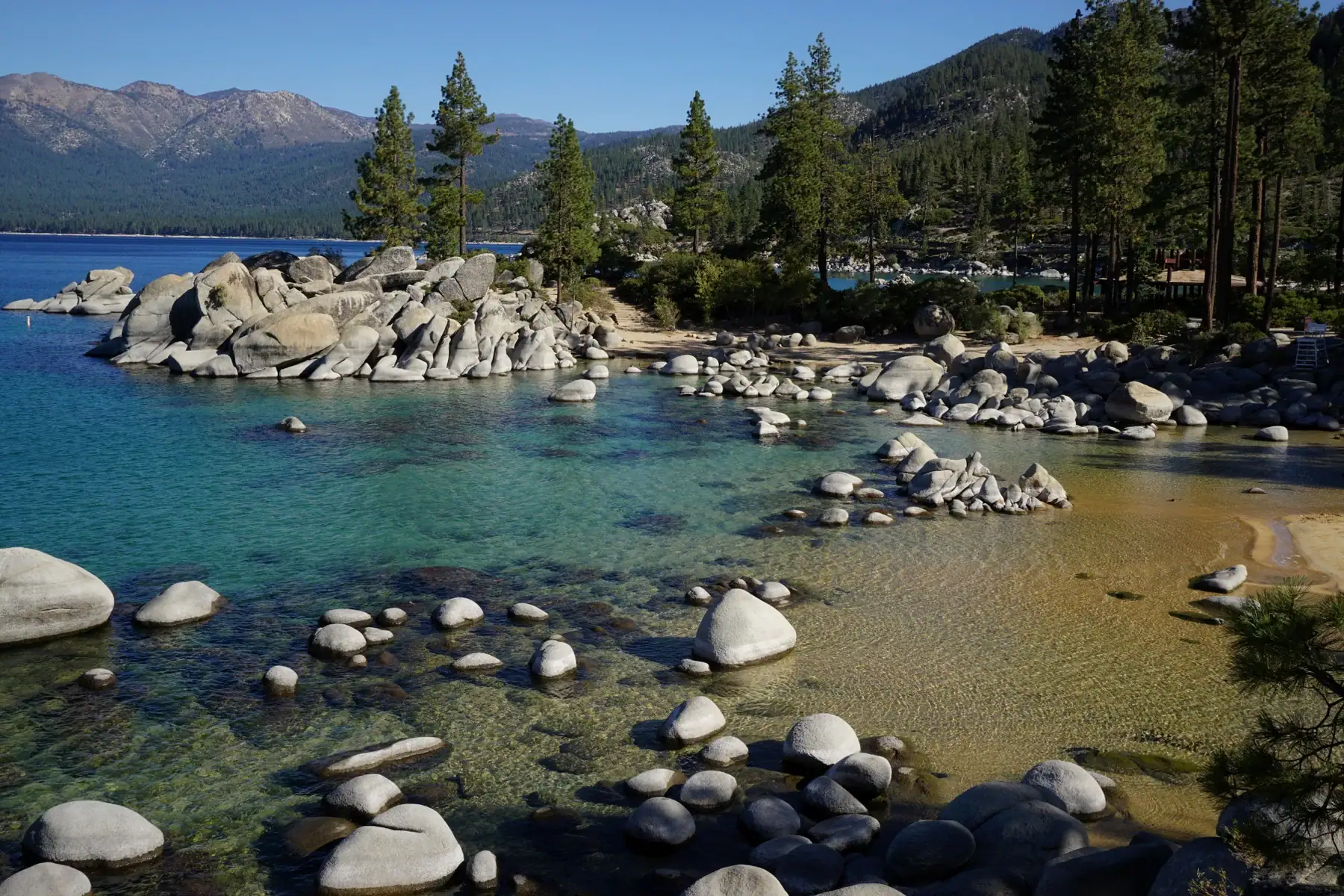
For many of us, there is a landscape that feels like a physical manifestation of our own interior life. A place where the water doesn’t just sit, but seems to hold the weight of the sky. Where standing at the edge of something deep and cold and clear, you feel — quite literally — that you could be everywhere at once.
I have chosen a quiet, deep-water location that has been a sanctuary for most of my adult life. A place of permanence. Clarity. In my Letter of Intent, I have named the exact coordinates and a specific threshold point that offers a peaceful crossing in the early morning hours, before the winds of the afternoon arrive. I choose not to name this place here — not out of secrecy, but out of a desire to keep its stillness intact.
In ceremony, the specific geography matters less than the emotional resonance. Whether it is a family forest, a coastal cliff, or a high mountain reach, the goal is the same: to find the place that feels like home for the atoms you are returning to the cycle.
When You Choose Your Own Place of Return
Look for the glassy and clear moments — the early morning, before the wind. Find the spot where time seems to slow, where the water or the earth or the sky feels like it has been waiting for you. That quality of stillness is not accidental. It is where threshold work belongs.
Once you have chosen your place, research the legal requirements for that specific body of water and state. Regulations vary significantly. When you contact your cremation provider, ask them to note your intended disposition location on the required permit — it is a small step that protects your wishes and removes a logistical burden from your family during an already demanding time.
The Music I Chose
I am a celebrant, which means I understand the role of silence, of breath, of timing. I have spent years developing what I call the Threshold Method — a way of using sound to hold ceremonial space, particularly at moments of transition. The instrument I work with is a steel tongue drum. For this ceremony, it is the music I want.
I say this not to prescribe it, but to illustrate the principle: choose the music that is genuinely yours.
The music of your ceremony — whether it is a drum, a cello, a recording of something you loved, a voice singing without accompaniment, or the sound of the water itself — should arrive from the actual texture of your life. Not from what seems ceremonially appropriate. Not from what you’ve heard at other people’s services. From what you love, what moves you, what you have returned to in moments of threshold.
For outdoor water ceremonies, live acoustic instruments carry beautifully — they cut through wind and water in a way that recorded music often cannot. A simple repeating pattern is easier to hold in a moment of grief than a complex arrangement. And silence, as I have learned from years of ceremony work, is itself a form of music. The pause after the last note is as important as the note.
Whatever you choose, put it in writing. Leave the name of the piece, the performer if it’s recorded, the moment in the ceremony you want it played. Don’t leave it to interpretation. The specificity of your instructions is its own act of love.
A Ceremony Script for the Returning Tide
What follows is the ceremony I have written for my own water burial. I offer it here not as a template to be borrowed wholesale, but as one example of how the science of borrowed atoms, the philosophy of generous return, and the specifics of a loved place can be woven into words.
The Ceremony of the Returning Tide
For a water burial at a beloved natural body of water
Written by Ema Drouillard, for her own return
The Gathering
The officiant or a chosen speaker begins as the group gathers at the water’s edge.
“We are here not to say a final goodbye, but to witness a change in form. Ema spent a lifetime marking the thresholds of others — the joining of hands, the beginning of families, the naming of paths. Today, we mark her own final threshold.”
The Reading: Borrowed Atoms
“It is a scientific fact that we never truly leave the world we inhabit. The air we breathe today contains the very same molecules exhaled by the ancients — by the trees that stood a thousand years ago, and by every soul who has ever called this earth home.
Ema understood this flow. She knew that our bodies are not fortresses, but temporary patterns — a collection of borrowed materials that the universe now needs back. By choosing water and salt today, she is making a final, generous gift: returning those materials to the cycle, so they may become the snow on these peaks, the clarity of this water, and the life that follows.”
The Threshold
The music begins. The urn is brought forward and held above the water.
“This vessel is made of the earth and the sea. It is designed to sink into the cold, still heart of this water — a place Ema loved for its peace and its permanence.
As we place this urn into the water, we are not losing her. We are widening the circle. We are releasing the pattern so the atoms can get back in the game. From this moment on, she is in the mist that rises at dawn, and in the rain that feeds the trees.”
The urn is lowered gently into the water. The group watches in silence as it sinks.
The Moment of Silence
Wait for the ripples to still. Let the silence hold.
A Letter from Ema
Before the final words, a designated reader speaks these words — written by Ema herself, to be read aloud at this moment.
“I have designed this return not out of fear, but out of a deep love for the cycle of things. If you feel a lightness in your heart as you release these ashes, know that I felt it too — the day I buttoned down the plan and danced down the street.”
The Closing
“The physicist Lawrence Krauss once wrote: ‘You are all stardust. The atoms in your left hand probably came from a different star than your right hand.’
Ema, thank you for the life you lived and the love you gave. We return you now to the elements. May you find rest in the deep, and may we find you again in every breath we take.
The ceremony is over. The cycle continues.”
Feel free to adapt this for your own ceremony, replacing my name with the name of someone you love, and the particulars of my life with the particulars of theirs. A ceremony script is not a form to be filled in — it is a frame for truth. The truth is the part that belongs to you.
The Letter of Intent: A Gift to Those You Leave Behind
In California, your Will — the legal document — is often read after the immediate decisions about your body have already been made. This is why I have written a Letter of Intent: a separate, clearly worded document that tells those who love me exactly what I want, and why, so they don’t have to guess in the worst moment of their lives.
Here is the version I have written for myself, offered as a model you can adapt:
Letter of Intent for Final Disposition
To be kept where family can find it immediately — not with the will, but in a visible, accessible place.
To my family, executor, and healthcare agent,
I write this with clarity and love, while I am well, to spare you any uncertainty during what will already be a difficult time. These are my wishes. They reflect who I am and what I believe about the world, and I ask that you honor them.
1. Primary Method: Water Cremation (Alkaline Hydrolysis)
I ask that my remains be handled through alkaline hydrolysis — commonly known as water cremation or aquamation. I have researched this process carefully and find it the most ecologically generous and physically honest method available. Please contact a licensed provider in the Bay Area who offers this service and confirm they can serve my location without additional mileage fees.
2. The Vessel for Return
Please choose a deep-sink biodegradable urn for my water burial — specifically a Himalayan salt urn or a sand-and-gelatin vessel designed for deep water. These materials sink immediately and dissolve completely, leaving no trace. I do not want a standard paper urn that may drift before sinking, and I do not want my ashes scattered loose in open air. I have seen, as an officiant, what that can feel like for those who love someone. I don’t want that for you.
3. Place of Final Return
There is a landscape I have returned to for most of my adult life — a place where the water holds the weight of the sky, and the silence is of the particular kind that ceremony requires. I have chosen a quiet, deep-water location there as my place of return. The exact coordinates and the specific threshold point are documented separately and kept with this letter. Please refer to that document for the precise location. Ask the provider to note the destination on the disposition permit. I have researched the legal requirements; please confirm them again at the time of need, as regulations may change.
4. Music
Please play live music as the urn is placed — something acoustic, something that carries over water. If you are uncertain what to play, let the sound of the water itself be enough. Silence, held with intention, is a form of music too.
5. Philosophical Intent
Please do not hold this as a somber disposal. I chose water and salt because I wanted my atoms to return immediately and completely — free to rejoin the water cycle, the forest, and the stars. I wanted to be generous with what the universe lent me. Stand at the water’s edge and know that I am, quite literally, everywhere now.
6. Legal Declaration
Pursuant to California Health and Safety Code Section 7100.1, I declare that these instructions shall be binding upon all persons, and no person shall be liable for carrying out these instructions in good faith.
Signed: _________________________________ Date: _____________
Witnessed by: __________________________ Date: _____________
Once written, sign it in front of a witness and keep a copy somewhere visible — not locked in a filing cabinet, not buried in a drawer, but in a place your family will find it immediately. Some estate planners call this the “refrigerator rule”: put it somewhere as obvious and accessible as the family refrigerator. A bright envelope in a kitchen drawer, a folder labeled clearly on a shelf, a digital copy shared with those you trust.
The clarity of this document is itself an act of ceremony. It is the last piece of your own story that you get to write before others carry it forward.
The Freedom of Having It Buttoned Down
There is a particular kind of lightness that comes from having this planned. I don’t mean the lightness of having avoided thinking about death. I mean the lightness that comes from having thought about it fully, made decisions that feel right, and written them down so that the people who love me don’t have to carry that weight in grief.
As a ceremony professional, I have walked alongside enough families in their hardest moments to know what the absence of that planning costs. It costs time when time is already scarce. It costs energy when energy is already depleted. And sometimes it costs the ceremony itself — the moment becomes about logistics rather than love because no one knew what the person wanted.
Pre-planning a water cremation is not morbid. It is the same impulse that leads you to write vows with care, to choose words for a baby’s blessing with attention, to think about the closing of a memorial service with as much intention as the opening. Ceremony is how we mark what matters. And the ceremony of our own return deserves the same care we give to everyone else’s.
Research Local Providers
Ask specifically about your location, their transport radius, and whether they offer pre-need contracts. Lock in today’s pricing if you can.
Choose Your Vessel
If you plan a water burial, research deep-sink biodegradable urns. Ask your provider what types they stock or whether you can supply your own.
Name Your Place
Identify the body of water, confirm its legal requirements for burial, and name it clearly in your Letter of Intent with enough specificity for a permit.
Write the Letter
Use the template above as a starting point. Sign it, have it witnessed, and put it somewhere your family will find it immediately — not in a file cabinet.
Ready to Begin Your Own Conversation?
Planning a meaningful ceremony — for yourself or someone you love — begins with a single conversation. I’m here to help you find the words.
Begin the Conversation Explore Ceremony ServicesQuestions People Often Ask
Is water cremation available in California?
Yes. California legalized alkaline hydrolysis (water cremation) through AB 967, which went into effect in 2020. The number of licensed providers in the Bay Area and Northern California has grown significantly since then. When researching providers, ask specifically about your location to confirm you fall within their standard service area and won’t incur additional transportation fees.
What is a deep-sink biodegradable urn and why does it matter?
A deep-sink urn is specifically designed for water burial — it sinks quickly (rather than floating and drifting), and it dissolves completely without leaving any environmental trace. Standard biodegradable urns are often designed for soil burial and may float for a long time before sinking in cold water. For a water burial ceremony, the type of urn matters both practically (ensuring the remains reach the intended resting place) and ceremonially (allowing those present to witness a clear, intentional threshold).
Why is a Letter of Intent different from a will?
A will is a legal document that is often read after the immediate decisions about your body have already been made — sometimes days after death. A Letter of Intent is a separate document designed to be found and acted upon immediately, before any arrangements are finalized. It communicates your specific wishes in plain language to those who love you. While a Letter of Intent may not carry the same legal weight as a will in all jurisdictions, California Health and Safety Code Section 7100.1 provides strong protections for documented disposition instructions.
Can I scatter or bury ashes in a lake or river?
Regulations vary significantly by state and by body of water. California has more restrictive rules for scattering in public waterways, while Nevada law is more permissive regarding water burial in public waterways. Before planning a water burial at any specific location, research the laws of the state where the body of water is located, and ask your cremation provider to note the destination on the required disposition permit. Many providers are experienced with these requests and can guide you through the process.
What should I consider when choosing music for a water burial ceremony?
The most important consideration is that the music reflects the actual person — not what seems generically ceremonial. Live acoustic instruments carry well outdoors and in open water environments where wind and ambient sound can interfere with recordings. Simplicity serves grief better than complexity; a repeating melodic pattern is often easier to hold during an emotional moment than an elaborate arrangement. Whatever you choose, document it specifically in your Letter of Intent so those you leave behind don’t have to guess.
Is it possible to pre-plan and pre-pay for water cremation?
Yes, many water cremation providers offer pre-need contracts that allow you to lock in current pricing and document your wishes in advance. This is one of the most practical gifts you can give to your family, removing both the financial and logistical burden from those who will already be grieving. Prices for alkaline hydrolysis have been stabilizing as more providers enter the market, making pre-planning now a financially sensible choice.
Is water cremation compatible with Catholic beliefs?
Many Catholics are surprised to learn that the Church formally permitted cremation as far back as 1963, when Pope Paul VI issued Piam et Constantem, lifting a longstanding prohibition. Before that, cremation had been discouraged because of its historical association with denying the Christian belief in bodily resurrection. What changed was not the theology, but the recognition that cremation could be chosen for practical reasons entirely compatible with Christian faith.
The Church’s position has been refined over time. The 1983 Code of Canon Law confirmed cremation is permitted. A 2016 document from the Congregation for the Doctrine of the Faith added further guidance: cremated remains should be kept in a sacred place such as a cemetery or columbarium, rather than scattered or kept at home, with limited exceptions. Traditional burial remains the preference, but cremation — including water cremation — is entirely acceptable when handled with the same dignity and intentionality the Church brings to burial.
For Catholic families considering water cremation, the most meaningful question is not the method itself, but how the remains are honored afterward. A thoughtfully planned ceremony and a sacred resting place satisfy both the spirit of the Church’s guidance and the family’s desire for an ecologically generous return.
Can RememberedWell help me write a ceremony for a water burial?
Absolutely. Writing ceremony scripts for memorial and celebration of life services is one of the core offerings at RememberedWell — including scripts for non-traditional services like water burials, natural burials, and eco-focused ceremonies. If you are planning ahead for your own ceremony or helping a family create a meaningful gathering at a natural site, I’d be glad to help you find the right words.
Every Story Deserves a Ceremony
Whether you’re planning ahead for yourself or honoring someone you’ve loved, RememberedWell creates personalized ceremony scripts that hold the depth of what matters most.
Start Your Story Explore Memorial Services