What Is an Interment of Ashes Ceremony? A Clear Guide to Interment, Inurnment, and Committal
Untangling the words families hear at the hardest possible moment — so you can plan with confidence, not confusion

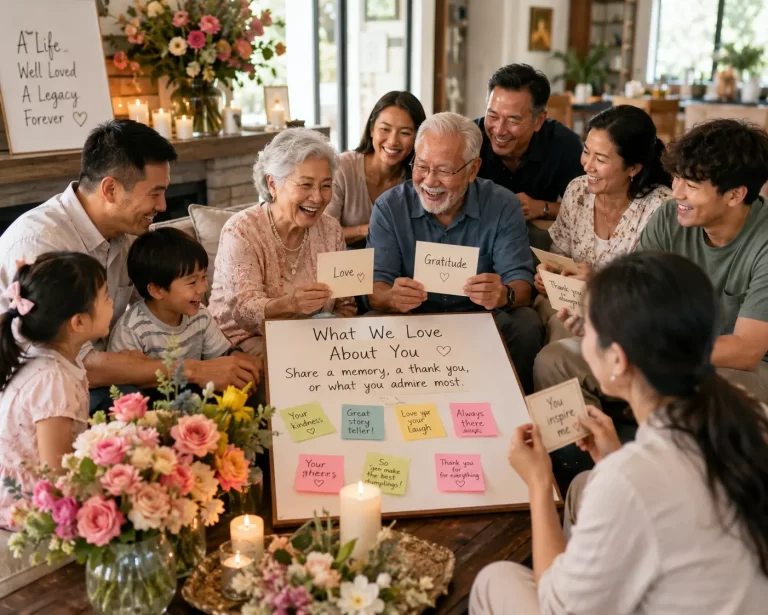
A family gathers for a quiet interment of ashes ceremony in a memorial garden.
Quick Answer
An interment of ashes ceremony is the gathering held when cremated remains are placed in their permanent resting place — a cemetery plot, columbarium niche, or memorial garden. It’s different from inurnment (placing ashes into the urn itself) and different from a traditional committal service (which usually implies a religious, often Catholic, graveside rite). Here’s what matters most:
- Interment refers to the final placement — it applies to caskets and urns alike
- Inurnment is the earlier step of transferring ashes into the urn
- Committal is a ceremony term, often carrying religious connotations, though not always
- You do not need religious language, clergy, or Catholic tradition to hold a meaningful ceremony
In This Guide
- What Is an Interment of Ashes Ceremony?
- Interment vs. Inurnment vs. Committal: Clearing Up the Confusion
- Do You Need Religious Language or Clergy?
- What Happens During the Ceremony
- Choosing Where It Will Take Place
- What to Include: Words, Readings, and Ritual
- How I Support This Ceremony
- Frequently Asked Questions
A woman called me last spring, three months after her father’s cremation. The ashes had been sitting on her mantle since January, and she felt guilty every time she walked past them.
“We keep saying we’re going to have the service,” she told me, “but every time I search online, I get funeral homes talking about committal rites, and it all sounds so Catholic. We’re not religious. I don’t even know what to call what we want to do.”
She isn’t alone. I hear a version of this same confusion often — families who know exactly what they want (a quiet, meaningful gathering to lay their person to rest) but who get lost in unfamiliar funeral-industry language before they even get to plan it.
If that’s you, this guide is meant to clear the fog. By the end, you’ll know exactly what to call your interment of ashes ceremony, what it actually involves, and how to shape one that feels true to your family — with or without religion.
What Is an Interment of Ashes Ceremony?
An interment of ashes ceremony is a gathering held when cremated remains are placed in their permanent resting place — most often a cemetery plot, a columbarium niche, or a designated area of a memorial garden. It marks the moment a family lays their loved one to rest for the final time, whether that happens the same week as the cremation or, as it often does, many months later.
The word “interment” itself simply means burial or permanent placement. It’s a broader term than people realize — it applies equally to a casket lowered into the ground and to an urn placed in a garden or niche. What makes an interment of ashes ceremony distinct is simply that cremated remains, rather than a body, are what’s being laid to rest.
This ceremony can happen immediately after cremation, or — as is increasingly common — weeks or months later, once a family has had time to decide where the ashes belong and gather the people who matter most.
Interment vs. Inurnment vs. Committal: Clearing Up the Confusion
This is the part I most want to untangle, because I’ve watched it stall families at exactly the wrong moment. Three words get used almost interchangeably online, and they genuinely mean three different things.
Interment
Interment means the final, permanent placement of remains — full stop. It doesn’t specify religion, ritual, or tradition. A casket burial is an interment. An urn placed in a memorial garden is also an interment. If you’re planning to lay ashes to rest somewhere permanent, “interment” is the accurate, neutral word for what you’re doing — which is exactly why I use it as the umbrella term throughout this guide.
Inurnment
Inurnment is a narrower, earlier step: the act of placing cremated remains into an urn in the first place. It happens before the ceremony, typically arranged by the crematorium or funeral provider. You won’t usually “attend an inurnment” the way you’d attend a ceremony — it’s a practical step, not a gathering. Where families get tripped up is seeing “inurnment” and “interment” used almost interchangeably online, when they actually describe two separate moments: one is putting ashes in the urn, the other is putting the urn in its resting place.
Committal
Committal is where most of the religious weight lives. Historically, “the rite of committal” refers to a specific liturgical ceremony — most visibly in Catholic and other Christian traditions — where clergy lead prayers and scripture at the graveside as the final act of a funeral rite. That’s why searching “committal service” so often returns diocese and parish pages: the term is genuinely rooted in that tradition.
But committal, at its plainest, just means “entrusting” or “consigning to.” You don’t need a priest or a specific faith background to hold a moment of committal — you simply need words that mark the transition, spoken by whoever you choose.
At a Glance
- Interment — the final placement of remains (casket or urn); the broadest, most neutral term
- Inurnment — placing ashes into the urn itself; a practical step, not a ceremony
- Committal — a ceremony of entrusting remains to their resting place; often religious in usage, but not required to be
- If you’re planning a gathering for ashes going to their final resting place, interment of ashes ceremony is the most accurate, most searchable, and least religiously-loaded term to use
Do You Need Religious Language or Clergy?
No. This is worth saying plainly, because so much of the language around this ceremony assumes a Christian, often Catholic, framework by default.
An interment of ashes ceremony can be entirely secular, entirely religious, or anywhere in between — interfaith, humanist, spiritual-but-not-religious, or simply personal. I come to this work as both an ordained minister and a Third Order Benedictine Oblate, which means I’m equally comfortable holding traditional sacred language and holding none at all. What matters isn’t which tradition the words come from — it’s whether they sound true to the person you’re honoring and the family gathered around them.
If your family is secular, you’re not missing a “real” ceremony by skipping scripture. A secular interment of ashes ceremony can include poetry, personal reflection, silence, music, or simply the honest words of the people who loved that person most.
What Happens During the Ceremony
Interment of ashes ceremonies are typically brief and intimate — usually 15 to 30 minutes, though there’s no fixed rule. A general shape looks something like this:
- Gathering — family and close friends arrive at the chosen site
- Opening words — a welcome that names why everyone has come together
- Reflection — readings, a brief life story, or personal remembrances
- The act of placement — the urn is set into its resting place
- Closing words — a final blessing, poem, or moment of silence
Some families choose to have each person present add something small — a flower, a handful of soil, a personal object — as part of the placement itself. Others prefer the simplicity of words alone. Neither is more meaningful than the other; what matters is that it feels right for the people in the circle.
Choosing Where It Will Take Place
Where an interment of ashes ceremony happens depends on family wishes, cemetery or memorial garden availability, and any prior arrangements the person may have made. Common locations include a cemetery plot, a columbarium niche, a dedicated memorial or urn garden, or in some cases private property where local regulations allow it.
If your family is also considering scattering rather than a permanent resting place, that’s a related but different path — I’ve written a separate guide on ash scattering ceremonies if you’re still deciding between the two. Some families even choose both: a portion interred permanently, and a portion scattered somewhere meaningful.
What this can look like
One family I worked with chose a small memorial garden a short drive from where their mother had lived for forty years. We gathered on a Saturday morning — just eleven people, her three children, their families, and one lifelong friend. There was no clergy, no scripture. Instead, each grandchild read a single sentence about a memory of her, and her eldest son spoke the closing words himself. It took under twenty minutes. It was, by every account, exactly right.
What to Include: Words, Readings, and Ritual
Whether religious or secular, most interment of ashes ceremonies draw from a similar toolkit — you simply choose which pieces fit your family:
- An opening that names the moment — a few sentences acknowledging why everyone has gathered
- Readings — scripture, poetry, prose, or words written by the family themselves
- A moment of personal reflection — brief remembrances from one or several voices
- Words spoken at the placement itself — this is the heart of the ceremony, and where “committal” language traditionally lives
- A closing — a blessing, a poem, or simply silence held together
If you’re drafting these words yourself and want a starting point for secular or interfaith readings, the Funeral Consumers Alliance maintains general educational resources on ceremony planning that many secular families find helpful as a starting reference.
“You don’t need the right religion to say the right words. You need words that are true.”
How I Support This Ceremony: A Sacred Committal
I call the version of this ceremony I write and deliver A Sacred Committal — a name that holds the reverence of “committal” without assuming any particular faith tradition. It’s built as an enhancement to my Complete Experience and Two Lives, One Ceremony packages, meaning it pairs professional ceremony writing with my presence and delivery on the day.
A Sacred Committal includes a custom-written script for the interment moment itself — the opening, the words spoken as the urn is placed, and the closing — shaped entirely around your family’s story, beliefs, and comfort level, secular or sacred. As a certified celebrant with training across multiple faith traditions, I can hold whatever balance of reverence and simplicity your family needs.
Ready to Plan This Moment?
A Sacred Committal adds a custom-written interment ceremony to your Complete Experience or Two Lives, One Ceremony package.
View Pricing & Add A Sacred Committal Begin a TributeIf your family is also planning a broader memorial or celebration of life, A Sacred Committal can stand alone as a smaller, later gathering, or serve as the closing chapter to a larger service — whatever timeline feels right for the people you’re gathering.
Frequently Asked Questions
What is the difference between interment and inurnment?
Interment is the final placement of remains in their permanent resting place — it applies to both caskets and urns. Inurnment is the earlier, separate step of placing cremated remains into an urn, which typically happens before any ceremony takes place.
Is a committal service the same as an interment of ashes ceremony?
They describe overlapping moments, but “committal” carries stronger religious connotations, especially in Catholic and Christian usage, while “interment of ashes ceremony” is a more neutral term that works equally well for secular, interfaith, or religious families.
Do I need a priest or religious leader to hold this ceremony?
No. A meaningful interment of ashes ceremony can be led by a celebrant, a family member, a friend, or no formal officiant at all. Religious leadership is one option among many, not a requirement.
How long after cremation can we hold the interment ceremony?
There’s no deadline. Some families hold it within days of cremation; others wait months while they decide on a location or gather family from out of town. Waiting doesn’t diminish the meaning of the ceremony.
Can we combine interment with ash scattering?
Yes. Many families choose to inter a portion of ashes permanently while scattering another portion somewhere meaningful — a favorite place, a body of water, or family land. The two aren’t mutually exclusive.
What should we say during the placement of the urn?
This is the emotional center of the ceremony, and it’s worth writing in advance rather than speaking spontaneously in the moment. A short passage acknowledging the person’s life and the finality of this placement is traditional, whether phrased with religious language or in your family’s own words.
How much does A Sacred Committal cost?
A Sacred Committal is a $350 enhancement, available with the Complete Experience or Two Lives, One Ceremony packages. Full pricing details are available on the pricing page.