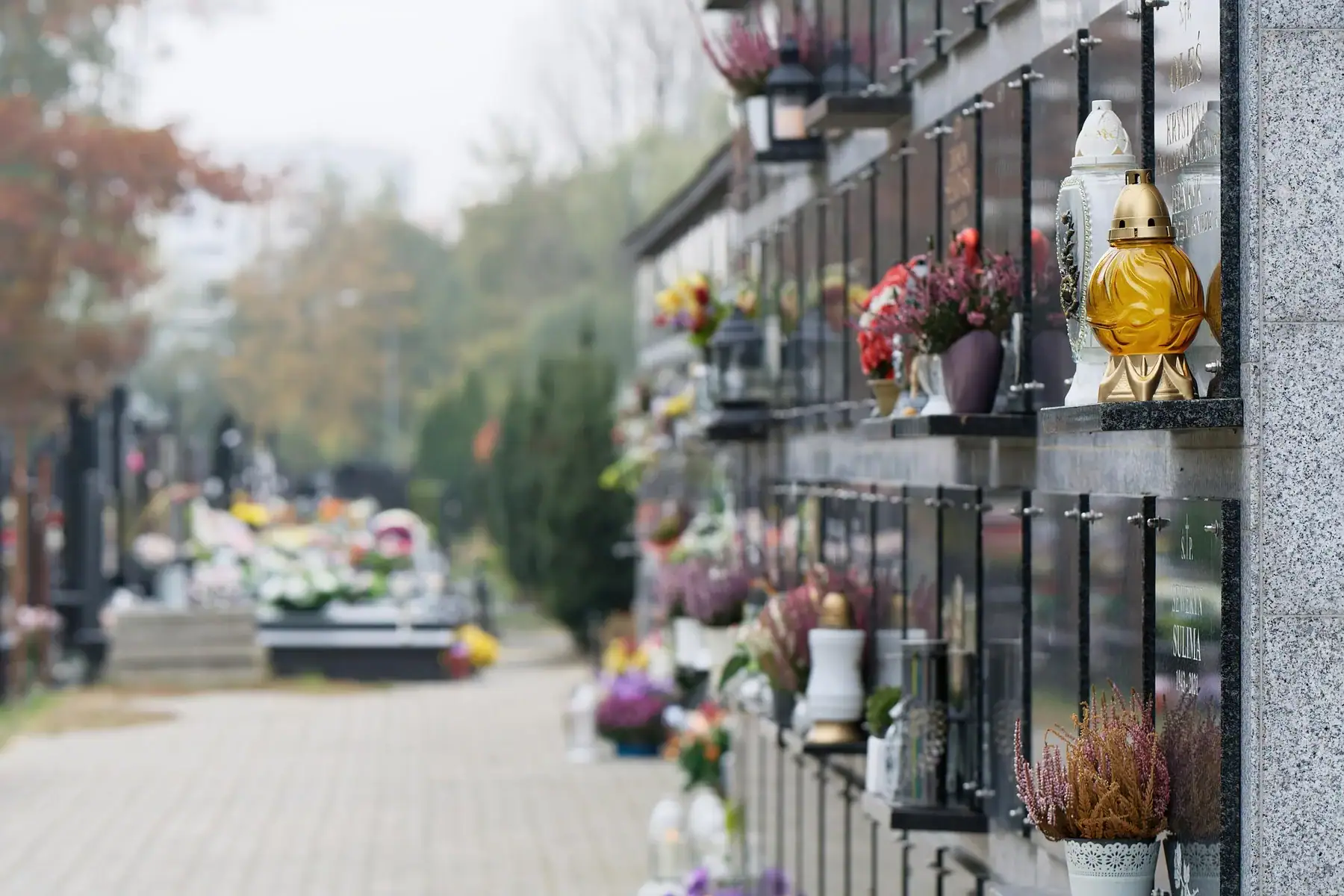

Questions to Ask a Water Cremation Provider: Pricing, Details & What Every Family Should Know
Real 2026 pricing, honest provider comparisons, and the questions most families never think to ask — until it’s too late
Planning your final arrangements in advance is one last act of care for those you love.
Knowing what questions to ask a water cremation provider — before you’re in the middle of grief or a time-sensitive decision — can save your family thousands of dollars and a great deal of confusion.
For many families today, cremation is the answer to how, but choosing who to trust with that process feels overwhelming. There are so many providers, varying prices, unfamiliar terms, and in the middle of grief — or the quiet anxiety of pre-planning — it’s hard to know what you’re even supposed to ask.
This post is for you. Whether you’re planning months ahead or navigating an unexpected loss, here are the questions that actually matter — and what the answers should look like.
If you’re also thinking about what comes after — the memorial service, the gathering, the ceremony that honors who your loved one truly was — we can help with that too. But first, let’s talk about the practical questions every family deserves answers to.
In This Guide:
- Understanding Your Options: Flame vs. Water Cremation
- One Thing We Discovered That May Surprise You
- The Aquamation Machine Owners in California
- The Questions to Ask Every Provider
- What Our Research Found: A Real Comparison
- Green Flags and Red Flags
- A Note on Comparison Shopping
- How This Fits Into the Bigger Picture
- How to Pre-Plan Without a Pre-Need Contract
- Frequently Asked Questions
Understanding Your Options: Flame vs. Water Cremation
Before you compare providers, it helps to know that not all cremation is the same. There are two primary types available in California today.
Flame cremation (also called traditional cremation) uses high heat and is the most widely available and generally least expensive option. It has been the standard for decades and is offered by nearly every cremation provider.
Aquamation (also called water cremation or alkaline hydrolysis) is a newer, gentler process that uses water and natural chemistry rather than flame. It’s considered more environmentally friendly, and many families find the idea of it more peaceful. It became legal in California in 2020 and is available through a growing number of providers — though not all of them own their own equipment.
Neither is better than the other — it’s a deeply personal choice. But knowing which you’re considering will shape the questions you need to ask. The rest of this post focuses primarily on aquamation providers, where the landscape is newer and the details matter most.
If you’d like to understand the process before deciding, this short video explains what water cremation is and why many families find it meaningful:
Video provided for educational purposes. Viewing is entirely optional.
One Thing We Discovered That May Surprise You
What we found when we researched providers serving Marin County and Novato
When we began researching aquamation providers in the Bay Area, we found something that most families would never think to ask about: there are only 5–6 aquamation machines in the entire state of California. Many providers are simply coordinators — they handle your family locally, but send the body to one of a handful of facilities to perform the actual cremation.
In our research, three of the four providers we initially contacted all used the same aquamation machine — in Palm Springs. The cremation itself is identical across all three. What differs between those providers is who handles your family, how your money is protected, what the total cost actually is, and how far your loved one’s body travels before the process begins.
We share this not to alarm, but because it illustrates exactly why these questions need to be asked. Providers aren’t obligated to volunteer this information. You have to ask.
The Aquamation Machine Owners in California
When you work directly with a machine owner, you remove the middleman — and often reduce cost, transit time, and complexity. As of April 2026, the owner-operated aquamation facilities in California are:
This post focuses on providers we personally researched for families in Marin County and the Bay Area. If you’re on the Central Coast, Simply Remembered in Goleta is worth contacting directly. In San Diego, White Rose in Escondido operates their own facility. Contact each directly for current pricing in those regions.
The Questions to Ask Every Provider
1. What is the all-in price?
This sounds obvious, but it’s one of the most commonly misunderstood pieces of the process. Most providers advertise a base price, but the actual total is almost always higher once you factor in:
- Geographic service fees — if you’re outside their immediate service area, there may be an additional charge.
- Home pickup fee — is transportation from the place of death included, or billed separately? This ranged from included to $400 among the providers we researched.
- Transport to the cremation facility — if the provider doesn’t have a local facility, the body may need to travel significant distance. One provider we reviewed charged $1,270 in transport fees alone.
- Death certificates — you’ll need multiple copies. Banks, insurance companies, the DMV, pension administrators, and others each require an original. Most families need 6–10 copies.
- Urn costs — some plans include a basic urn; others do not.
- Processing fees — some providers add a payment processing fee, typically around $100–$155 for credit card payments.
Always ask for a written, itemized price list. In California, funeral homes are legally required to provide one. If a provider hesitates or gives vague totals, that tells you something important.
2. Where does the cremation actually happen?
This is the question most people never think to ask — and one of the most important ones. For aquamation specifically, the equipment is expensive and not every provider owns their own machine. Some act as a local coordinator and transport the body to a facility elsewhere.
In our research of providers serving Novato and Marin County, three out of four used the same aquamation facility in Palm Springs — a six-hour drive away. Ask directly:
- Do you have your own cremation facility, or do you use a third-party location?
- Where is that facility located?
- How long will it take from the time of death until the process begins?
For one Palm Springs-based provider we reviewed, the timeline from death to cremation was approximately 30 hours — 24 hours of preparation plus a six-hour drive. For providers with their own local facilities, that timeline was significantly shorter.
3. Do you offer pre-need contracts, and how are the funds protected?
A pre-need contract lets you plan and pay for cremation services before they’re needed — locking in today’s prices. But here’s the question most people don’t think to ask: what happens to your money if the business closes?
California law requires that a portion of pre-need funds be held in a state-regulated trust. Ask:
- Are pre-need funds held in a state-regulated trust?
- What happens to my money if this business closes or is sold?
- Is there a fee or penalty if I need to transfer my contract to another provider?
4. Does pre-planning save money, or cost more?
You’d assume that planning ahead would lock in a lower price. But that isn’t always the case. One provider we reviewed actually charges more when you pre-plan — the opposite of what most families expect. Ask this question directly before assuming pre-planning is always the financially smart move.
5. Do payment plans cost extra?
Many providers offer the option to pay over time rather than in full. Ask whether there is any additional fee or interest for using a payment plan, and whether the price is locked in once you begin.
6. How many death certificates do you recommend, and why?
In California, you’ll typically need certified copies for each bank or financial institution, life insurance companies, the Social Security Administration, the DMV, pension or retirement account administrators, property title transfers, and the Veterans Administration if applicable. Most families order 6–10 copies. It’s much easier to order extra upfront than to request additional copies later.
7. Do you notify the Social Security Administration?
This small detail can save a family real difficulty. Unreported deaths can result in continued benefit payments that must be returned. Of the providers we reviewed, Pacific Internment includes Social Security notification as part of their standard service. It’s worth asking any provider directly.
8. What urn options are available, and what’s included?
Some providers include a basic urn with their standard plan; others don’t. Ask what’s included, what upgrades are available, and whether you can supply your own urn. Honors Cremation includes a Moso Bamboo urn in their base plan.
9. Is it better to call or email?
A practical note that can save you days of waiting: some providers respond much faster by phone than by email. For pre-need questions especially, call directly. You’ll get more accurate and complete answers — and you’ll be able to ask follow-up questions in real time.
10. What information will you need from me — and should I gather it in advance?
Every California funeral home needs the same set of information to complete a death certificate. Gathering it in advance — and keeping it on file with your chosen provider — means your family won’t be scrambling for details during an already difficult time.
California Death Certificate: What to Have Ready
The following information is required by California law to complete a death certificate. Consider gathering these details now and providing them to your chosen provider as part of your pre-planning file.
About the decedent:
- Full legal name, gender, and Social Security Number
- Date of birth and age
- City and state of birth
- Marital status and name of surviving spouse (if applicable)
- Usual home address, occupation, and industry
Family details:
- Father’s full name and state of birth
- Mother’s full name (including maiden name) and state of birth
Documents to have on hand:
- Copy of birth certificate
- Social Security card or number
Timing: Most of this information must be submitted to the provider within 7 days of death. Having it pre-filled and on file with your chosen provider removes that burden from your family entirely.
Certified copies of the death certificate can be ordered through your county recorder or the California Department of Public Health — Vital Records (CDPH-VR).
A practical step worth taking today: Ask your chosen provider if they accept a pre-filled information form on file. Most do. Completing it now — while you have time to look things up carefully — means your family simply makes one phone call when the time comes.
Planning a Memorial Service?
Once you’ve chosen a provider, the next question is often: how do we create a gathering that truly honors who they were? That’s exactly what we do at RememberedWell — custom-written memorial ceremony scripts for families across the country.
Explore Memorial Services Schedule a ConversationWhat Our Research Found: A Real Comparison
Pricing and service details below were gathered directly from providers serving the Novato and Marin County area in April 2026. All figures shown are based on home pickup. Cremation pricing changes frequently. Always request a current written price list from any provider before making decisions. This post will be updated as information changes.
Here is what we found when we put those questions to ask a water cremation provider to the test — contacting aquamation machine owners serving families in Marin County and Novato, California. These are confirmed prices gathered directly — not estimates from websites.
A Key Finding for Pre-Planning Families
Of the providers we personally researched for the Bay Area, Aquaterra offers the lowest confirmed all-in price at $3,866 — with home pickup, bamboo urn, one death certificate, all permits and fees included, and a pre-need price lock at no extra charge. Honors Cremation also offers a price lock with funds held in trust, fully adjustable and refundable. Pacific Internment owns the closest local machine and keeps your loved one in the Bay Area, but does not offer a price lock. Anubis owns the Palm Springs machine but their pricing actually increases when you pre-plan.
Also worth knowing: Simply Remembered in Goleta (Central Coast) and White Rose in Escondido (San Diego) both own and operate their own aquamation machines. We did not personally research these providers, but families in those regions should contact them directly for current pricing.
A note on pickup fees: Every provider charges differently depending on where your loved one passes — hospital, coroner’s office, home, hospice, nursing home, or board and care facility each carry different fees. Always specify the likely place of death when contacting a provider so you’re comparing accurate totals. All prices shown above are based on home pickup.
Green Flags and Red Flags
Beyond price, how a provider communicates tells you a great deal about how they’ll treat your family during one of the hardest times of your life.
✅ Green Flags
- Transparent, itemized pricing provided without you having to ask
- Clear explanation of where pre-need funds are held and how they’re protected
- Honest answer about where the cremation actually takes place
- Licensed, verifiable credentials
- Good reviews from families who’ve been through the process
- Responds promptly and patiently to your questions
🚩 Red Flags
- Vague answers about where pre-need funds are held
- Reluctance to provide a written price list
- Pre-planning that costs more than paying at time of death
- Pressure to decide quickly
- No clear answer about where the cremation actually takes place
- Slow or evasive responses to direct questions
A Note on Comparison Shopping
It may feel strange — even uncomfortable — to shop around for cremation services. But it’s not only practical, it’s wise. Prices can vary by hundreds or even thousands of dollars for comparable services. And more importantly, you deserve to feel confident in whoever you trust with this.
If you’re pre-planning, you have the gift of time. Use it. Contact two or three providers, ask the same questions, and compare not just the price but how you feel after the conversation. Were they patient? Clear? Did they seem genuinely focused on serving families, or on closing a sale?
If you’re planning in the immediate aftermath of a loss, it’s completely appropriate to say, “I need 24 hours to review my options.” Reputable providers will understand.
How This Fits Into the Bigger Picture
Choosing a cremation provider is one piece of end-of-life planning — and often the first practical decision that gets made. But it’s rarely the only one.
Many families also find themselves thinking about whether they want a memorial service, a celebration of life, or a quiet private gathering, and how to create something that feels personal and meaningful rather than scripted or generic. Those are the questions we specialize in at RememberedWell.
We don’t handle the logistics of cremation itself — but we do help families create memorial ceremony scripts and celebration of life ceremonies that truly honor who their loved one was. Our custom-written scripts can be delivered by your family, a trusted friend, or a local officiant — wherever you are in the country.
Pre-planning is one of the most loving things you can do for the people who will someday carry the weight of these decisions. By thinking it through now — asking the hard questions, comparing your options, putting something in writing — you spare your family from having to do it in the middle of grief.
“And if you’re already in that grief right now: take a breath. You don’t have to figure all of this out at once. Ask the questions above. Take notes. Give yourself permission to make one decision at a time. You’re doing something hard, and you’re doing it with care. That matters.”
When You’re Ready to Plan the Ceremony
We create personalized memorial ceremony scripts for families across the United States — written around who your loved one actually was, not a generic template. Scripts start at $350 and are designed for your family to deliver, or to share with a local officiant.
View Memorial Services Begin a ConversationHow to Pre-Plan Without a Pre-Need Contract
If the provider you’ve chosen — like Pacific Internment — doesn’t offer a price-lock pre-need contract, you still have options for setting money aside now so your family doesn’t have to absorb the cost later. One approach worth considering: a TreasuryDirect account funded with U.S. Treasury Bills.
This isn’t complicated. It’s essentially a savings account held by the U.S. government, invested in short-term Treasury Bills that currently yield around 4–5% annually. The money grows, it’s protected, and it’s accessible to your family when the time comes — and because it’s not tied to any funeral home, your funds are fully safe if the provider ever changes or closes.
💚 Setting Up a TreasuryDirect Account for Funeral Pre-Planning
What this account is for: Holding funds designated for cremation and end-of-life services, invested in U.S. Treasury Bills and intended to cover costs at the time they are needed.
Estimated current cost (April 2026) — Pacific Internment example:
- Base cremation (home pickup, Marin County): $4,150
- Mileage fee: $6.00/mile beyond 20-mile service area
- Death certificates (8 recommended × $26): $208
- Estimated total: ~$4,358+
How to set it up:
- Go to TreasuryDirect.gov and click “Open an Account” — choose Individual account
- You’ll need: Social Security number, U.S. bank account and routing number, email address, and driver’s license or state ID
- Once the account is open, purchase Treasury Bills (4-week, 13-week, or 26-week). They auto-renew and currently yield around 4–5% annually
- Label the account purpose in your records as: “Funeral pre-planning funds — [Provider Name]”
Why this works: The account grows over time to cover any price increases. If there is money left over, it passes to your estate. The funds are backed by the U.S. government and are not tied to any funeral home.
Practical tip: Once your account is set up, document the login credentials and account purpose clearly and store them with your important papers — alongside your will, advance directive, and any provider preferences. Your family will need to know the account exists and how to access it. Download: Instructions for My Family →
Frequently Asked Questions
What questions should I ask a water cremation provider?
The most important questions to ask a water cremation provider are: What is the all-in price (including all fees)? Where does the cremation actually take place? Do you own your own equipment or use a third-party facility? How are pre-need funds protected? Does pre-planning lock in today’s price or cost more? Are payment plans available at no extra cost? Is it better to call or email you? These questions will help you compare options clearly and avoid surprises.
What is the difference between aquamation and traditional cremation?
Traditional cremation uses high heat (flame), while aquamation (also called water cremation or alkaline hydrolysis) uses water and natural chemistry to achieve the same result more gently and with a smaller environmental footprint. Both produce remains that are returned to the family. Aquamation became legal in California in 2020 and is offered by a growing number of providers, though not all of them own their own equipment.
How many aquamation machines are there in California?
As of April 2026, the aquamation machines in California are owned and operated by: Pacific Internment (Emeryville), Anubis Inc. (Palm Springs), Simply Remembered (Goleta), and White Rose (Escondido). Note: Ethos offers aquamation in the Bay Area through local funeral home partners but performs the cremation at their machine in Oregon. Many providers who advertise aquamation services are coordinators routing to one of these facilities — often without making this clear to families.
How much does aquamation cost in Marin County?
Based on our April 2026 research, confirmed all-in costs for aquamation providers serving Marin County ranged from $3,866 (Aquaterra, with home pickup, bamboo urn, one death certificate, all permits and fees included) to over $5,600 (Anubis Inc., with transport and pickup). Costs vary significantly depending on the provider’s location, what’s included, and transport fees. Always request an itemized written price list and ask specifically about every fee.
Do aquamation providers in the Bay Area have their own facilities?
Not necessarily — and this is one of the most important questions to ask. In our April 2026 research of providers serving Marin County and Novato, only Pacific Internment operates their own aquamation machine locally, in Emeryville. Other providers may route through the Palm Springs facility owned by Anubis Inc., or in the case of Ethos, a facility in Oregon.
Is it okay to comparison shop for cremation services?
Absolutely. Comparison shopping is practical and wise — prices can vary by thousands of dollars for comparable services. If you’re pre-planning, you have time to contact multiple providers and ask the same questions of each. If you’re planning after a loss, it’s completely reasonable to tell a provider you need 24 hours to review your options. Reputable providers will always understand.
What comes after cremation — do I need to plan a ceremony?
Many families do choose to hold a memorial service, celebration of life, or private gathering after cremation — and finding the right words for that gathering can feel just as overwhelming as the logistics. At RememberedWell, we create custom memorial ceremony scripts for families across the country, written around who your loved one actually was. Our scripts can be delivered by family members, a trusted friend, or a local officiant.