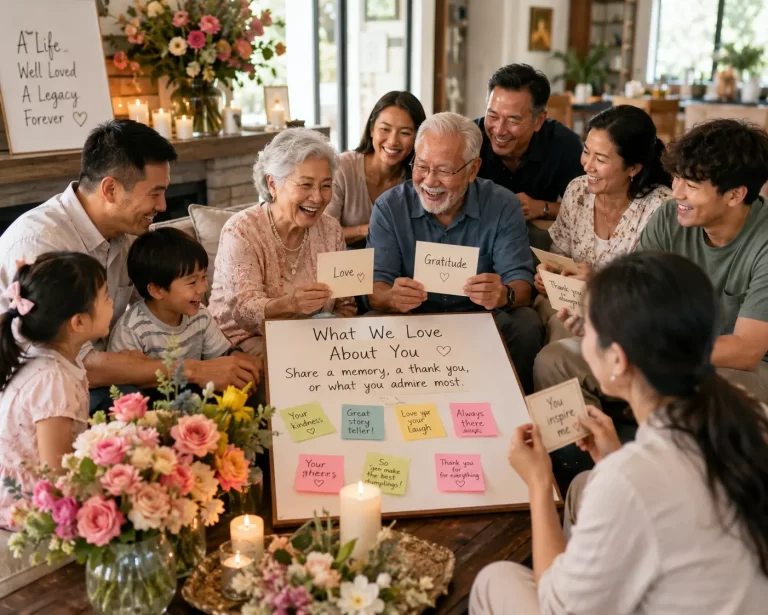

The Greatest Gift: Making Your Final Arrangements as an Act of Love
Three generations of hard lessons — and why the most loving thing you can do is spare those you leave behind the guesswork
In This Post
- My Grandfather: The Conversation That Never Happened
- My Grandmother: The Decision No One Should Make Alone
- My Brother Robert: The Weight of Seventy Pages
- My Mother: A Woman Who Worked the System
- On Names, Lineage, and What We Carry Forward
- The Greatest Gift
- What to Actually Do: A Practical Guide
- A Special Note for Military Families
- Questions People Often Ask
I have spent more than twenty years standing at the thresholds of other people’s lives — officiating weddings, baby blessings, coming of age ceremonies, memorials. I have held the space for hundreds of families in their most tender moments.
What I have learned, from both sides of that threshold, is this: grief is heavy enough on its own. The paperwork should not be part of it. The guesswork should not be part of it. The phone calls to government agencies and the boxes of documents and the months of waiting — none of that should fall on someone who is already trying to find their footing in a world that has just changed shape.
I know this not only as a ceremony professional, but as a daughter, a granddaughter, and a sister. I have lived each of these lessons in my own family. And I am sharing them here because they changed me — and because they might spare you or someone you love the same weight.
My Grandfather: The Conversation That Never Happened
When my grandfather died, there had been no conversation. No instructions, no preferences, no direction left behind for the family. Nothing had been written down, nothing had been said. He simply left — and with him went any certainty about what he would have wanted.
What followed was what always follows in that silence: decisions made under pressure, by people already deep in grief, with no compass to guide them. Every choice — how to honor him, where to gather, what to do with what remained — had to be made without knowing whether it was right. Without knowing whether it was his.
That uncertainty is its own kind of grief. Not just the loss of a person, but the loss of the chance to honor them correctly. The nagging question that never quite goes away: Was this what he wanted? Would he have chosen this?
We couldn’t know. He hadn’t told us. And so we did our best — which is all any family can do when they are left without a map.
What a Single Conversation Could Have Changed
It doesn’t require a legal document or a formal meeting. A conversation at the kitchen table, a handwritten letter in a drawer, a simple list of preferences kept somewhere the family knows to look — any of these would have been enough. The absence of that conversation is not negligence. It is human. But it has a cost, and the cost is paid by those who are left behind.
My Grandmother: The Decision No One Should Make Alone
My grandmother was a strong woman. She had raised her children after the war — shaped by hardship in the way that generation was, with a quiet toughness that didn’t need to announce itself. She had survived the unsurvivable. She knew her own mind.
She had simply never put it in writing.
When she was on her deathbed, the family turned to me. If decisions were going to be made, someone needed to make them — and it became clear that someone would be me. I asked the family what she would have wanted. I was met with grief and uncertainty and the particular helplessness of people who loved someone deeply but had never had the conversation.
The decision before us was whether to continue life-sustaining measures — to leave her connected to machines in a facility she never would have chosen, or to allow a natural end with dignity. My mother was already deep in grief. My father was beside her, consumed with consoling her. The weight of the moment settled on me.
I took my mother — gently, with love — into that facility. I walked her through it. I wanted her to see, with her own eyes, what the alternative looked like. What it would mean to leave her mother there, sustained by machines, in a place that bore no resemblance to the life she had lived. I told her — plainly, with the directness that moment required — that if we made that choice, her mother would come back from the grave and haunt her for it.
It was not a gentle thing to say. It was a true thing. And my mother, who knew her own mother, understood.
She made the decision. The right one. The one her mother would have made for herself, if she had ever been asked.
When the machines fell silent, I bathed my grandmother one last time — an offering of tenderness as she lay at the edge of her leaving.
“The greatest act of love is not protecting the people you love from hard decisions. It is making those decisions yourself, while you still can, so they never have to.”— Ema Drouillard
My grandmother was a strong woman who had survived a great deal. She deserved to have her wishes honored. She deserved to have someone speak for her with confidence, not guess on her behalf in grief. That she didn’t have that — that my mother had to carry the weight of a decision that should never have been hers to make — is the lesson I have carried with me ever since.
My Brother Robert: The Weight of Seventy Pages
My brother Robert K. Droulard was a Marine.
He grew up in Algonac, Michigan — a town of three thousand people on Lake St. Clair, where the main street ran along the river and the water was not a backdrop but a way of life. We were raised on that water. People called us river rats, and we wore it without apology. Our grandfather — on my mother’s side — owned the tool and die shop that supplied Chris-Craft. Boats were not something we admired from a distance. They were something we built, understood, and loved from the inside out. Our father built them alongside us.
Robert carried all of that knowledge with him when he enlisted. He went to San Diego in 1973 as part of Platoon 2073, United States Marine Corps. By 1974 he was a Lance Corporal. His nautical knowledge — earned on Lake St. Clair, in the shops, on the water — distinguished him, and he was assigned to the Navy, where he served as a Fireman (FN), an E-3 rate specializing in engineering and machinery. He was honorably discharged in October of 1977. He came home to Algonac. He loved that town his whole life. And it was in Algonac that he died.
Robert K. Droulard — Service Record
When Robert died, I did not have his DD-214 — the Certificate of Release or Discharge from Active Duty that is the essential document for every veteran’s benefits and burial. I also did not have his Social Security number. I was in California. He was in Algonac. I was navigating everything remotely — by phone, by mail, by fax — from across the country, without the ability to walk into an office, sit across from a person, or hand anything to anyone directly. I was not a veteran. I had never enlisted or been drafted. I did not know how these systems worked, which departments to contact, which forms to file, or in what order.
What followed was months of work. Seventy pages of information arrived. Form after form. Department after department. Each one requiring documentation from the last. Without the DD-214, I couldn’t establish his service record. Without his Social Security number, department after department simply stopped — unable to move forward, redirecting me elsewhere. I was navigating a bureaucracy I had never encountered, in grief, alone, three thousand miles away, while my brother lay in the hospital morgue.
And then — after weeks of struggle — I learned something.
I learned that if I contacted the hospital and indicated that the body would not be claimed, the hospital was required to contact the mortuary. Because Robert was a veteran, the Veterans Administration would step in and ensure he was cared for. Within days of that call, everything changed. Within two weeks, Robert had a complete military burial with full military funeral honors — the flag, the rifle salute, everything his service had earned him and that he deserved.
It was a profound relief. It was also a lesson I will never forget about what it costs a family to navigate a system they don’t understand — and what becomes possible when someone finally finds the right door.
What Every Military Family Should Know
If a veteran dies without a DD-214 on file, the process of accessing burial benefits can be lengthy and overwhelming. But there are mechanisms in place — the VA’s National Cemetery Scheduling Office, state veterans affairs offices, and hospital social workers who specialize in exactly these situations — that can move things forward when a family is lost in the system.
The single most important thing a veteran can do for their family is to keep their DD-214 in an accessible, known location — not in a safe deposit box, not in an unmarked folder, but somewhere the people who love them will find it immediately. A copy should be filed with the county recorder’s office, which will store it permanently at no cost. This one act removes an enormous burden from those left behind.
If you are the family of a veteran and cannot locate the DD-214, contact the National Personnel Records Center (NPRC) in St. Louis — they maintain military service records and can assist with reconstruction. It takes time. Plan ahead if you can.
My Mother: A Woman Who Worked the System
My mother was already gone when Robert died. But I felt her presence in that hospital as clearly as I have ever felt anything. She was there — I am certain of it — waiting for her only son to be released from the morgue and brought to rest.
She had spent much of her life working systems she didn’t fully understand in order to help him during his darkest hours. She was not a bureaucrat. She was not trained in these things. But she had will — extraordinary, stubborn, undefeatable will — and she had love, and those two things together had produced results that astonished everyone around her. She found the doors. She knocked until they opened. She got things done for her son with a persistence that was, in itself, a form of devotion.
When I finally found the door that moved — the call that set everything in motion, that brought him home in a matter of days with the honors he had earned — I felt her with me. I felt that I was finishing something she had started. That the will she had poured into fighting for her son during his life had not left the room when she did.
She was an example of sheer will and strength. And she deserved to rest. I hope, when her son was finally at peace, that she did.
On Names, Lineage, and What We Carry Forward
My brother went by Droulard — the name as my paternal grandfather brought it to America, simplified at arrival the way so many immigrant names were, the letters adjusted to fit the new country’s tongue. It was the name Robert lived under and loved. It is the name that belongs to him.
My own name is Drouillard — the original French-Canadian spelling, restored. I took it back during my divorce, in the middle of a legal battle with an attorney on the other side. It was an intense process. But I wanted my ancestors with me in that fight. I wanted the full weight of the lineage — the Drouillards who came before, who crossed water and built things and survived — standing beside me in that room. So I reached back through the family line and reclaimed what had been simplified away.
A name is not a small thing. It is a form of memory, a form of continuity. The decisions we make about what to carry forward — and what to document, and what to leave behind for those who come after us — are the same kind of decisions. They are acts of care across time.
Making your final arrangements is an act of exactly that kind of care. It is choosing to carry something forward on behalf of the people who will still be here when you are not.
The Greatest Gift
After my grandfather’s silence, my grandmother’s unspoken wishes, and the months of bureaucratic weight I carried for Robert — I made a decision. I told my family directly: if these responsibilities were going to fall to me, I needed to know what they wanted. I didn’t want to be left guessing. I didn’t want to make decisions in grief without a map. And I didn’t want anyone to have to do that for me, either.
So I planned my own arrangements. I researched water cremation — the most ecologically generous return I could find — and I chose a provider, a vessel, a place, and a ceremony script. I wrote a Letter of Intent. I put it somewhere my family will find it immediately.
And when it was all buttoned down, I danced down the street.
Not because death is small. Because having it handled — truly handled, with intention and love and specificity — lifts something you didn’t know you were carrying. The lightness on the other side of that planning is real. I have felt it. And I want it for you too.
“When your family is in grief, they should be free to decide whom to gather with, and how to remember you — not scrambling for paperwork. That freedom is yours to give them. It is a final gift, and it costs nothing but a little time and courage.”— Ema Drouillard
Pre-planning your final arrangements — and if at all possible, pre-paying for them — removes the financial and logistical burden from the people who are already carrying the emotional one. It means that when someone you love is in the deepest grief of their life, they are not on hold with a government agency. They are not filling out forms. They are not guessing what you would have wanted.
They are gathering. They are remembering. They are doing the only thing grief actually requires: being present with each other.
That is the gift. The greatest one you can give.
What to Actually Do: A Practical Guide
The planning doesn’t have to be complicated. It doesn’t require a lawyer or a large sum of money to begin. It requires a decision to start, and then a series of small, manageable steps.
Have the Conversation
Tell your family — out loud, clearly — what you want. Who should make decisions if you cannot. What your wishes are. A conversation is not a legal document, but it is where everything begins.
Write a Letter of Intent
A Letter of Intent is a plain-language document that tells your family exactly what you want for your body and your memorial. It is not a will — it is designed to be found and acted upon immediately. Keep it somewhere visible.
Contact a Provider
Research providers in your area for your preferred method — traditional burial, cremation, water cremation, natural burial. Ask about pre-need contracts that lock in today’s pricing.
Pre-Pay If Possible
A pre-paid arrangement removes financial pressure entirely from your family at the worst possible moment. Many providers offer payment plans. This is one of the most practical acts of love available to you.
Documents to Locate, Organize, and Share
Would You Like Help Writing Your Letter of Intent?
A ceremony professional can help you find the words — for the arrangements themselves, and for the ceremony that honors them. Let’s begin that conversation.
Begin the Conversation Explore Our ServicesA Special Note for Military Families
If you have a veteran in your family — or if you are one — please read this section carefully. The DD-214 is the single most important document in the military burial process. Without it, the path to accessing veterans’ burial benefits becomes long, bureaucratic, and exhausting for a grieving family.
I know this firsthand. I spent months navigating that path for my brother Robert. Seventy pages of forms. Department after department. Weeks of effort that produced nothing — until I found the door that had always been there, waiting, that I simply hadn’t known to open.
What Veterans and Their Families Should Do Now
- Record the veteran’s Social Security number alongside the DD-214. Without it, many departments are unable to move forward — it is a second essential piece of identification that blocks access at multiple points in the process if missing.
- File a copy with your county recorder’s office. This is free in most counties and creates a permanent, retrievable record that your family can access without going through federal agencies.
- Tell at least two family members where the original is kept. Not just one. People move. Memories fade. Two people knowing is the minimum.
- If the DD-214 is lost, contact the National Personnel Records Center (NPRC) in St. Louis. They maintain military service records and can assist with reconstruction — but allow significant time.
- Contact your local VA office about pre-registering for burial benefits. Much of the paperwork can be completed in advance, dramatically simplifying the process for your family.
- If a veteran dies and the family is lost in the system, hospital social workers, VA patient advocates, and veterans service organizations (VSOs) like the VFW and American Legion have staff specifically trained to help navigate exactly this situation.
My brother earned his military burial with full honors. He deserved it from the moment he was honorably discharged in 1977. It should not have taken the months it did. The system that was designed to honor him was simply too large and too complex for a grieving sister without a map to navigate alone.
If sharing his story spares one family that journey, then Robert’s name on this page has done something useful. That feels right.
Questions People Often Ask
What is the difference between a will and a Letter of Intent for final arrangements?
A will is a legal document that typically isn’t read until after the immediate decisions about your body have already been made — sometimes days or weeks after death. A Letter of Intent is a plain-language document designed to be found and acted upon immediately, before any arrangements are finalized. It tells your family specifically what you want for your body, your ceremony, and your resting place. While it may not carry the same legal weight as a will in all jurisdictions, it provides the guidance families need most in the first hours and days after a death.
Is pre-paying for funeral arrangements worth it?
For most families, yes — for two reasons. First, it removes financial pressure from people who are already managing the emotional weight of grief. Second, a pre-need contract typically locks in today’s pricing, protecting your family from future cost increases. Many providers offer payment plans, making pre-payment accessible even when funds are limited. The practical gift of having it handled is significant.
What is a DD-214 and why does it matter for veterans?
A DD-214 is the Certificate of Release or Discharge from Active Duty — the essential document that verifies a veteran’s military service and eligibility for benefits, including burial benefits and military funeral honors. Without it, accessing those benefits requires navigating a lengthy records reconstruction process through the National Personnel Records Center (NPRC) in St. Louis. Veterans should keep their DD-214 in an accessible location and file a copy with their county recorder’s office. Family members should know exactly where it is.
What military burial benefits are available to veterans?
Honorably discharged veterans are eligible for burial in a national cemetery at no cost, a government-furnished headstone or marker, a burial flag, and Presidential Memorial Certificate. Veterans may also be eligible for military funeral honors — including the folding and presentation of the flag and the playing of Taps. The specific benefits available depend on the veteran’s service record and discharge status. Contact the VA’s National Cemetery Scheduling Office or a local veterans service organization for current eligibility information.
What is an advance healthcare directive and do I need one?
An advance healthcare directive — sometimes called a living will or healthcare power of attorney — is a legal document that tells medical providers and your family what you want if you cannot speak for yourself. It names the person who makes medical decisions on your behalf and specifies your wishes regarding life-sustaining treatment. Without one, those decisions fall to family members who may disagree, or to medical providers who don’t know you. Having one is not morbid — it is one of the most loving things you can do for the people who would otherwise have to carry that weight.
How do I start the conversation with my family about final arrangements?
The simplest way is to start with your own plans rather than asking about theirs. When you can say “I’ve made my arrangements, and here is where everything is kept,” it opens the door naturally. Many families find that one person’s willingness to be direct gives everyone else permission to follow. If a formal conversation feels difficult, a letter — written at your own pace, in your own voice — can say what a conversation sometimes cannot. The goal is simply that the people who love you are not left guessing.
Can RememberedWell help me write a ceremony for a memorial service?
Absolutely. Writing personalized memorial and celebration of life ceremony scripts is one of the core services at RememberedWell. Whether you are planning ahead for your own ceremony or helping a family honor someone they have loved, a custom-written script ensures that the ceremony reflects the specific, irreplaceable person at its center — not a generic service, but a true honoring of a particular life. I’d be glad to help you find the right words.
Honor the Moment While You Still Can
The greatest gift you can give those you love is clarity. Let RememberedWell help you find the words — for your arrangements, your ceremony, and the story you want told.
Start the Conversation Read: A Generous Return